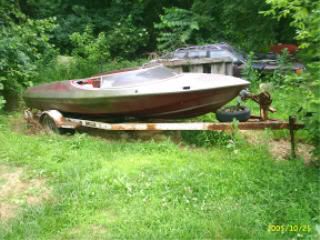
Re: Gel coat
Considering the thousands upon thousands of posts on these forums, the right way of doing things is usually either trampled into dust or ignored completely.
Rustoleum and PL Premium are king around these parts. Anything else is heresy. The right product for the job is probably a few bucks more and therefore a witch. Burn it.
What you say is fairly accurate, but what may be the best method of repair in one scenario may not be in the next one.
Many of the boats discussed here have little or no value even after having been fixed, plus they aren't the type of boat someone is going to keep for a long period of time, even though most people think they will keep it for decades when the work is being done. To do the work "correctly" (correctly would be a method that a professional could warranty would hold up for a very long period of time) can take a great deal of time and money. Many of the boats here were purchased for a couple hundred bucks and the budget to fix them is even less, so to make them usable again in the "correct" method would make the project out of reach for most.
Most of the suggestions given here are based on what the boat owner can afford and is capable of doing, plus what makes sense for the project. To say that a sprayed Awlgrip paint job is needed on a 40 year old 15' tri hull that will be outgrown in a year or two, or on a 12' aluminum fishing boat, would be extreme over kill. Just about any paint will hold up for a couple of years even if the boat sits outside under a tree and safety is not compromised by using a low cost paint. Nor would it pay to re-gel coat it.
As far as using PL for bedding stringers, most small boats builders use nothing to bed the stringers, they just sit on the hull, and bedding them really isn't a factor in safety, so what's used (or not used) makes little difference.
People are always informed of the best method to do the glass work, at least from what the experts here understand from the descriptions and pic's provided in the post. Here safety is the critical factor, and I don't see people receiving poor information. Now you can debate the epoxy verses polyester issue, but in reality for most of the boats being discussed on this forum its not going to make the slightest bit of difference which resin is used.
As far as plywood goes, I don't recommend any type, I only say what I use, but I feel to buy top of the line marine ply for a project boat that will only be used for a couple years could be considered overkill again. Even though many of these boats were built new with low cost plywood and poor laminating methods, they held up for at least 10 years without problems, many lasted 20+ years and were still in service when the rot was found. When I say in service, I mean the owner had no clue the stringers and transom were pulp, they only found this out when they went to fix a soft spot in the floor, or replace the carpet. Not that operating a boat with rotten stringers and transom is safe, just that most boats continue to function without issues until the wood is almost completely gone.
Now if someone asked about repairing a boat of great value that was still going to be of value for a long time into the future if fixed "correctly", then the answers and suggestions would most likely be different.






 Sorry haven't picked on opps in a while