Re: Transom strength for hydraulic jackplate
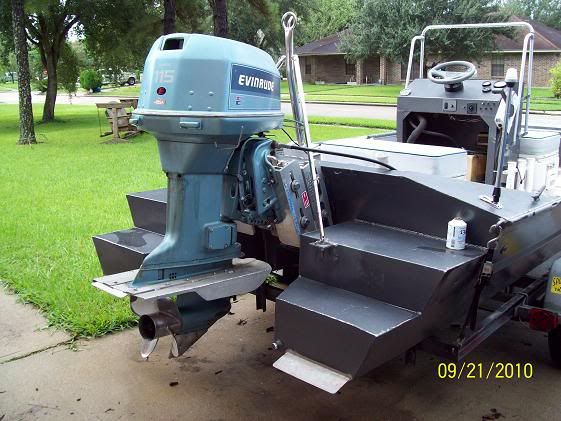
Man! Talk about a Frankenstein boat! Additional flotation welded on the back, some trim tab looking things added to the extra flotation boxes, and more stuff bolted onto the cavitation plate! Also looks like the transom was raised (its higher than the gunnels), and then some angle bracing added to the corners to help hold it all together..... Holy cow! I guess the original setup did not do what the owner wanted, and then it didn't handle the way they expected after modifying it..... All that stuff..... Boy, oh boy..... Hope it does what they want.
My guess is the motor is a higher HP than than the boats original rating.
Mark,
Since you obviously don't know anything about a boat manufactured by Alweld or a flats boat in general, let me try and school you right quick. I agree, it's not a pretty boat, but that's not it's purpose. With the exception of the trim tabs and larger tunnel, the boat is 100% factory. The "raised transom", "the angle bracing added to the corners to help hold it all together", and the so called "welded on floatation boxes", are all factory. You are correct on one thing though, the floatation boxes are welded on because fiberglass and resin just does not hold up in this application with aluminum. That is why they are welded on. The boat is designed to run in shallow water (about 6") and does a damn good job at it. I added the trim tabs and modified the factory tunnel myself. The purpose of the trim tabs are to keep the boat from porpoising and add lift to the stern while taking off. The purpose of the tunnel is to allow me to jack the prop up above the bottom of the hull if I need to. Again, this works exceptionally well and allows the boat to get up in about 12" to 14" of water. I added a vent to the tunnel also. The purpose off this "vent" is to keep the tunnel from creating a vacuum. The "stuff" that is on the cavitation plate is called a Shallow Blaster. The purpose of the Shallow Blaster is to catch the water coming out of the tunnel, redirect that water over the prop, and help hold that water over the prop and water intake on the motor when the motor is jacked up. It also helps prevent prop cavitaion and adds bow lift as well. This works exceptionally well also. When running in shallow water you use the water compression that is generated between the bottom of the hull and the bay floor to create additional lift. The "welded on" (remember, can't use fiberglass) floatation boxes aid in this as well. Also, you missed my home built stainless steel skeg gaurd that I made. As a boat owner, we are always trying and doing things to our boats to make them better, and "boy, oh boy" does it ever do exactlly what I want it to do now. The only thing I would like to do to it now, would be installing a new Evinrude outboard on it, but the '84 115 Evinrude that is on it runs like top so why change it. One thing about it though, I can take my junk anywhere you can go, but I dare you to even attempt to follow me. One last thing, it is rated for a 115 HP engine. Now, back to the original purpose of this thread. Thanks, Steven



 ).
).