


I have an older boat and want two batteries with a switch. One to start the boat and the other battery to work the fish finder, depth finder, radio, lights, bildge, blower, live well pump, etc.... How in the heck do I wire all that???














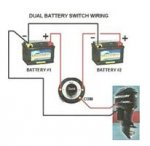

You've now seen two ways to do this. I don't see a trolling motor or any high current draw items on your list of accessories so right away I question the need for a second battery. Paranoia about a dead starting battery didn't seem to be a problem until the dual battery switch, isolators, ACR's and all the "life saving" devices appeared and now everyone with a row boat seems to feel they need a boat load of batteries. OK I'm done. But seriously, for your boat you can leave everything just as it is. Carry a jump start pack or another battery if you wish and a set of jumper cables. Cheap, simple and effective. However, if you really feel the need for a dual battery system then I need to ask the question -- do you want this to be a versatile and inexpensive system, or do you want an automatic, less versatile, more complex and more expensive system? There are a gazillion ways to do this but the simplest, least expensive and most versatile is the simple dual battery switch. However, if you are "switch challenged" and don't know when or why to use BAT 1, BAT 2, BOTH or OFF then perhaps the Add A Battery System is in order. The picture that Fireman431 posted only requires that the +12 volt feed to your console be connected to the COM terminal on the switch. You can now operate all accessories from BAT 1, BAT 2 or BOTH, you can charge BAT 1, BAT 2, or BOTH and you can start the engine on BAT 1, BAT 2 or BOTH. As I mentioned, if you can't determine when or why to use a particular switch position, do it another way. In my view, in your particular boat you could probably set the switch to BOTH, start the engine and leave the switch there. If you have two good batteries you could fish, listen to tunes, watch the locator and have you phone plugged in for days -- probably all season and never have to change the setting except to set it to OFF when you park the boat at the end of the day. If you add some high current draw stuff like high power amps, flood/spot lights, etc, then that's a different story and understanding the switch usage takes on more importance.
You didn't answer the question about if you understand how a dual battery switch works or whether you want an ACR along with it, or instead of! Understand that there are generally two electrical systems in a boat 1) the engine system and 2) the boat system. Starting of the engine and operation of the gauges occurs via the engine system. 2) The boat system consists of a pair of #8 or 10 gauge wires that run from the battery to the fuse panel at the console. The rest of your accessories are powered from that panel. Your trolling motor would be wired directly to the second battery. So tell us what you want and how you want it to work. Fireman posted the dual battery switch. All of the other accessories except the trolling motor get wired directly to the COM terminal of the switch. Connect the two negatives on the two batteries together and go boating. OFF = everything off. BAT 1 means BAT 1 is running everything, BAT 1 is being charged when the engine is running. The troller will work with the switch in any setting since it is wired directly to BAT #2. BOTH means everything is powered from both batteries and both batteries are being charged when the engine is running. In the BOTH position both batteries are in parallel so the troller would be running from BOTH batteries. In the BAT #2 setting BAT #2 powers everything and only BAT 2 will be charged when the engine is running. It doesn't get any simpler, cheaper, or more versatile than this. Lastly, you haven't told us what engine you have so we have no idea if the engine has enough alternator output to make any of this worth while.
