FORUM RULES UPDATED - The forum rules have been updated to continue to provide a friendly and safe environment for our member community. Please take a moment to review the updated rules and our terms of use and privacy policy. Click here for Forum Rules which has links to the 'terms of use' and 'privacy policy'.
In Other News . . .
You will notice a few enchancements to the forums to make your experience better. These include: Email Notifications, Thread Previews, Thread Starter Notation, and Emoji Options on the 'Like' icon. . .
Additionally, the merchant portions of the website have been updated and are now operational. . . . Check out iBoats for all your boating gear.
Not an outboard guy but have never heard of using anything on any head gasket. Silicone would be tops on my list of what not to use. A head gaskets needs to seal high pressures and needs flat surfaces on the head and block, nothing else
+1 on what AllDodge says. Either whoever put the head gasket is unaware of the pressures involved, or they may have been trying to take an easy low cost approach to fix a problem.
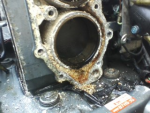
IF????? the gasket doesn't seal because of corrosion it might be needed to help seal the cylinders.
The last 2 Yamahas I worked on the cylinders were not sealing with just a gasket.
I eventually used silicone cause the owners weren't gonna buy new blocks.
These were really bad corrosion riddled motors.
Both had NEVER been flushed after use.
So yes there can be silicone on a head gasket.
Not recommended but sometimes needed.
The bottom where the exhaust chest mounts is corroded and had pin holes where the salt had eaten through.
More silicone.