


1984 Springbok Restoration

nvr_fd_away

Cadet
Joined
Jun 25, 2012
Messages
11
I have continued from another thread since my initial post (http://forums.iboats.com/showthread.php?t=560036) was related to a minor engine issue and I am now starting renovation of the interior of my boat. This is being done in 2 stages. First I want to rebuild the transom in the next week so I can get out on the water this summer. At the end of the summer/fall I will begin rebuilding the deck along with some major improvements to the overall design.

At this point I have built a motor mount and removed the motor. Pretty basic, I know, but you have to start somewhere. Tonight I will be cleaning everything out and am hoping I can start getting the new transom built over the next several days.

I do have some questions though. I have a 1/2" piece of plywood which I need to trim to the right dimensions and glue them together. I have seem a lot of different methods. The most predominant seem to be using resin (with or without cloth), gorilla glue, or PL Premium to bond the two pieces. I'm hoping to get some insight from someone with experience on what the best method is.

I plan on covering the glued plywood in 2 coats of resin before installing and plan on using regular 1/2" plywood. Not pressure treated or marine. Is there anything I need to consider when purchasing plywood, is one side finished better than "rough" or are they the same for this type of application?

At the end of the job I am considering covering the whole back of the transom (inside the boat) with truck bed liner. Has anyone done this, I may have seen it on another website. Is it better to cover the aluminum first, put the wood transom piece in and then cover everything again. I'm hoping someone has tried this before and can give me some insight.

I am loosely following these instructions. www.instructables.com/id/Transom-replament/#step1

I'll post some pictures in the next few days to show how it's coming along.
 

Woodonglass

Supreme Mariner
Joined
Dec 29, 2009
Messages
25,932
Re: 1984 Springbok Restoration

The best glue to glue plywood together is Titebond III 100% waterproof and it will NEVER delaminate. If you are going to apply resin only to the wood you must use epoxy. Polyester resin requires you to use fiberglass mat. If you do not it will crack and allow water to penetrate the wood. For aluminum boats, lots of guys just use rustoleum professional oil base paint to seal their transom wood. Thin the first coat with 50% mineral spirits so it soaks in really well, then apply 2-3 coats of full strength. It'll last a LONG time. I believe the consensus here on the forum is not to use truck bed liner in your aluminum boat. I could be wrong.
 

jigngrub

Fleet Admiral
Joined
Mar 19, 2011
Messages
8,155
Re: 1984 Springbok Restoration

Make sure you use an exterior grade plywood, the glue is waterproof in the exterior grade. Your better grades of exterior plywood will have fewer voids between the plies. ABX is a good grade.

Woodonglass is right on with the adhesive and epoxy resin.

Truck bed liner is ok for coating your plywood deck and transom material, but applying it to the aluminum hull doesn't do what people think it will (stop leaks)... and if your boat does leak the water will eventually work it's way through the bed liner and then you have to scrape the junk off to find your leak.

There has been a couple of good looking builds on here using the truck bed liner for deck (plywood) coating though.
 

nvr_fd_away

Cadet
Joined
Jun 25, 2012
Messages
11
Re: 1984 Springbok Restoration

Updates…

Will post pics later this evening.

So I have almost everything cleaned up. Just a bit of sanding left on the inside aluminum transom piece. I plan on finishing this while my wood is drying from treatment.

This has been a bigger pain that I initially though. The wood in the transom was so rotten that it basically fell apart except for a couple of small pieces that did not want to move. The biggest problem was the 16 bolts holding the wood in. While I managed to remove a couple of them the proper way, the majority were so corroded that there was no way to remove the traditional way. Since I didn’t have the proper drill bits on hand, out came the grinder. Every effort was made not to damage or scrape any part of the aluminum, other than some small scratches on one of the "handles" I think I did pretty good. I really hope that the PO did some of the work I came across, would be pretty embarrassing if it was built that way in the factory.

Thanks for the rustoleum advice woodonglass, after doing much more research I decided to go with this method. Although epoxy may give me a better seal, the original transom lasted over 30 years untreated and I anticipate the rustoleum method lasting at least this long.

I initially thought that I would need a 1" transom based on some quick measurements. I even went as far as buying 1/2" plywood. I took some additional measurement with everything removed and now suspect that I need 1 1/4" inches. I may try to re-measure some of the old wood that is still intact, but I suspect it would be a rough measurement at best. Since I already made a cardboard jig I'm thinking of cutting out the pieces out the 1/2" ply, screwing them together and doing a test fit. If everything feels a little loose, I will do it again with thicker ply. It's a bit of a pain, but my main motivation is to put a thick piece of wood into the transom slot to see how everything will line up. Since I had a motor sitting on the rotten transom for some time, the aluminum got bend back a bit. I'm hoping the 1" thick wood would encourage everything to straighten out again. At least enough to take some accurate measurements. I'm probably going to clamp this piece in place while making the thicker one in an attempt to encourage the metal to bend back into proper shape. Worst case I figure it will bend back once I put all the bolts through it in the end.

Thanks for the plywood advice jigngrub, I kind of sounded like I knew what I was talking about at HD. No truck bed liner will be used. I've decided to keep everything as open as possible for easy inspection as well and breathability and drainage of any unwanted moisture.

Some questions...

Do I need to seal the wood to the aluminum? Obviously the bolts will have to be sealed with 5200 or PL Premium, but will the flat surface of the plywood need to be sealed/glued to the aluminum? I have read some guys using epoxy or fibreglass, others just bolt on and seal bolts. I'm leaning towards leaving it bare, that way if moisture does get in, it will have an escape route. (There is no wood on the bottom 2" of the transom below the brackets that hold in the wood, so water can escape there.) The boat is on my trailer when I'm not using it, so it won’t be submerged constantly. Am I missing something with this approach?

Do I need to paint or treat the aluminum before attaching the wood?

Any help or advice would be appreciated. This forum has been most helpful so far. Will post pics later today once I get home.
 

nvr_fd_away

Cadet
Joined
Jun 25, 2012
Messages
11
Re: 1984 Springbok Restoration

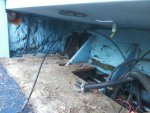
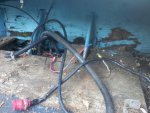
Pre demolition pics...

The top aluminum plate split, will have to make a trip to the welding shop.
2012-06-27 19.05.36.jpg


Other side. Note the bad JB Weld seal (drill is pointing to it). The wood rotted to the point that the aluminum part of the transom started pulling awau from the boat. I have removed the JB, hope aluminum will snap back together once wood support is added. Then hoping to have a plate welded on top for reinforcement.
2012-06-27 19.05.45.jpg
 

nvr_fd_away

Cadet
Joined
Jun 25, 2012
Messages
11
Re: 1984 Springbok Restoration

Inside transom ... wood rotted ... the one good thing is the 3 metal brakets are solid. I'm banking they'll provide enough support to snap the aluminum back to original shape.
2012-06-27 19.02.32.jpg
2012-06-27 19.02.25.jpg
 

jigngrub

Fleet Admiral
Joined
Mar 19, 2011
Messages
8,155
Re: 1984 Springbok Restoration

Updates…

Will post pics later this evening.

So I have almost everything cleaned up. Just a bit of sanding left on the inside aluminum transom piece. I plan on finishing this while my wood is drying from treatment.

This has been a bigger pain that I initially though. The wood in the transom was so rotten that it basically fell apart except for a couple of small pieces that did not want to move. The biggest problem was the 16 bolts holding the wood in. While I managed to remove a couple of them the proper way, the majority were so corroded that there was no way to remove the traditional way. Since I didn’t have the proper drill bits on hand, out came the grinder. Every effort was made not to damage or scrape any part of the aluminum, other than some small scratches on one of the "handles" I think I did pretty good. I really hope that the PO did some of the work I came across, would be pretty embarrassing if it was built that way in the factory.

Thanks for the rustoleum advice woodonglass, after doing much more research I decided to go with this method. Although epoxy may give me a better seal, the original transom lasted over 30 years untreated and I anticipate the rustoleum method lasting at least this long.

I initially thought that I would need a 1" transom based on some quick measurements. I even went as far as buying 1/2" plywood. I took some additional measurement with everything removed and now suspect that I need 1 1/4" inches. I may try to re-measure some of the old wood that is still intact, but I suspect it would be a rough measurement at best. Since I already made a cardboard jig I'm thinking of cutting out the pieces out the 1/2" ply, screwing them together and doing a test fit. If everything feels a little loose, I will do it again with thicker ply. It's a bit of a pain, but my main motivation is to put a thick piece of wood into the transom slot to see how everything will line up. Since I had a motor sitting on the rotten transom for some time, the aluminum got bend back a bit. I'm hoping the 1" thick wood would encourage everything to straighten out again. At least enough to take some accurate measurements. I'm probably going to clamp this piece in place while making the thicker one in an attempt to encourage the metal to bend back into proper shape. Worst case I figure it will bend back once I put all the bolts through it in the end.

Thanks for the plywood advice jigngrub, I kind of sounded like I knew what I was talking about at HD. No truck bed liner will be used. I've decided to keep everything as open as possible for easy inspection as well and breathability and drainage of any unwanted moisture.

Some questions...

Do I need to seal the wood to the aluminum? Obviously the bolts will have to be sealed with 5200 or PL Premium, but will the flat surface of the plywood need to be sealed/glued to the aluminum? I have read some guys using epoxy or fibreglass, others just bolt on and seal bolts. I'm leaning towards leaving it bare, that way if moisture does get in, it will have an escape route. (There is no wood on the bottom 2" of the transom below the brackets that hold in the wood, so water can escape there.) The boat is on my trailer when I'm not using it, so it won’t be submerged constantly. Am I missing something with this approach?

Do I need to paint or treat the aluminum before attaching the wood?

Any help or advice would be appreciated. This forum has been most helpful so far. Will post pics later today once I get home.

Measure your transom cap and make the thickness of the transom slightly thinner to allow for the splashwell and transom metal thickness.

It is adviseable to seal your transom wood with something like exterior grade Spar urethane, 4 coats.

Painting the inside of your transom metal will prevent galvanic corrosion from taking place, clean your metal with a wire cup brush in a drill or grinder and the coat it with and etching aluminum primer like zinc chromate.

No need to seal the wood to the transom, just use a good sealant like 3M 5200 on all of your bolts and hardware penetrations.
 
Top