






ADHESION: Fiberglass to Plastic

carlosg

Cadet
Joined
Jun 21, 2014
Messages
11
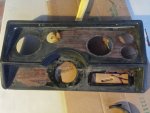
_IB-DASH_20150724_200700.jpg It seems like I'm trying to achieve the impossible dream: rebuilding my boat's instrument panel, its black plastic and I want to reinforce it with fiberglass, however from the research I've done it seems there's not a bond between the two materials, does anyone have any experience doing this? I really would like to use fiberglass on my project

(I tried uploading some pics -jpg's under 200kb- but I just keep getting an "error uploading image" message after first jpg)
 
Last edited:

MTboatguy

Fleet Admiral
Joined
Jul 8, 2010
Messages
8,988
What I would probably try to do is use the old one as a mold and build a new fiberglass dash from it, you would just have to get some release agent to spray on that old PVC dash, then glass over it for a few layers, cut out your holds, paint it what ever color you want and be back in business.
 

Watermann

Starmada Splash of the Year 2014
Joined
Jan 12, 2013
Messages
13,837
You may just be able to use the plastic dash as a mold for a new FG dash panel. Since the FG won't stick to it you should be able to bore the holes for the gauges to get everything right and then separate the 2 pieces. .
 

MyShop

Recruit
Joined
Oct 20, 2014
Messages
4
Check the instructions for West System Epoxy. Or call Gougeon Bros. - they make the product and their customer service is fantastic. We're talking about epoxy, not polyester resin, which is like Bondo. Polyester is not as sticky, strong, or as waterproof as epoxy. The usual method for bonding epoxy to most anything is to clean & de-grease, sand with 80 grit, wipe with a white paper towel & rubbing alcohol (don't use a strong solvent). But for PVC add to this what's called "flame treating:" After any alcohol has dissipated, take a propane torch and pass the flame ABOVE the part to be bonded - stay about an inch above it - Do Not aim the flame at the part. Then you have maybe 20 or 30 minutes to make the bond. This would be the thing to do if you want to keep the front & reinforce the back. The more you read about using epoxy the better job you'll get. Good Luck.
 

MTboatguy

Fleet Admiral
Joined
Jul 8, 2010
Messages
8,988
Given the age of the part shown in the picture, I would much rather use it for a mold and just build a new more durable one in fiberglass, it is not that difficult.

Being honest with you, that picture of the dash reminds me a lot of a dash out of a '72 Chevy Chevette!

:D
 
Last edited:

gm280

Supreme Mariner
Joined
Jun 26, 2011
Messages
14,605
WOW if seem everybody was thinking the exact same thing here. And that is a first that I 've seen. YES, use some good release agent and then polyesister resin and a few coats of fiberglass reinforment and then after ti cures, remove the old dash. The you can revesre the order and make a new fiberglass (polyester actually) model of your old dash. It will be solid, rigid, workable and useable for many many decades. And then you can paint, color, or even use some type vinyl covering of your choice... :thumb:
 

DeepBlue2010

Lieutenant
Joined
Aug 19, 2010
Messages
1,305
+1 on using it to create a mold. If you follow the process correctly, the first layer of your new part would be gelcoat. So, the new dash will come out gelled as if it were factory made. If keeping the original look is not a must for you, take a look at some modern looking dashes.
 

BillP

Captain
Joined
Aug 10, 2002
Messages
3,290
What is wrong with the old part? If it only needs reinforcing you could add wood on the back flats and used screws with dressy trim rings to mechanically tie the parts together. If you want to use poly it would be mechanically fastened and doesn't matter whether it sticks or not. The media is structural on its on and the existing panel turns into a mostly cosmetic function.

If you go the mold route and haven't made molds before...as best as I can see from your pic the existing panel will not be easy to pull a part off due to the design. It may have been originally molded but probably on a different mold process and not one you can duplicate at home. Those straight vertical edges don't lend themself to being user friendly. Glassing over them will not be so difficult but I'm thinking glassing down into for the final part will be a challenge. You can always break the plastic away from the part instead of pulling it free though.

Another thought is traditional mold releases depend on a polished surface and again are not user friendly on rough surfaces...100 grit sanding marks woulld be very rough. Rough surfaces need a different release method. Liquid paraffin painted on with a brush works, saran wrap, wax paper, brown paper, etc...you get the idea but this method gives a crude mold fijnish and the final part finish to be done manually after pulling from the mold. You will have to do the finish no matter what and leaving it to the one off part will likely be faster (it has been for me). Just saying be ready for a learning curve if molding.

Good luck and may the sun set when you want it to.


bp
 

MTboatguy

Fleet Admiral
Joined
Jul 8, 2010
Messages
8,988
The original part was heated and vacuumed on a heated mold, A good friend of mine does this type of work and they make all kinds of things, including dash panels for boats and cars. Once cleaned up, that PVC panel will release quite easy, because although it is a pebble finish, it is very slick, it is hard to even get super glue to stick to that stuff.
 

BillP

Captain
Joined
Aug 10, 2002
Messages
3,290
The original part was heated and vacuumed on a heated mold, A good friend of mine does this type of work and they make all kinds of things, including dash panels for boats and cars. Once cleaned up, that PVC panel will release quite easy, because although it is a pebble finish, it is very slick, it is hard to even get super glue to stick to that stuff.


Poly doesn't stick to pvc but if its a pebble finish it may mechanically hold the part...a near 90 degree pull from multiple webs to remove a pebble finished part, good luck. This would likely be a split mold if vacuumed formed in frp. But I question how a person can gelcote and/or glass down inside those thin vertical surfaces, not withstanding pulling the finished product off.

bp
 
Top