Frank Acampora
Supreme Mariner
Thread starter- Joined
- Jan 19, 2007
- Messages
- 12,004
This is in answer to a question I had received.
I previously ported my old 1967 two cylinder Chrysler 55. It gave decent results, but you can't expect miracles from 44.5 cubic inches.
After porting, it did drive my 15 foot Glastron V153 deep vee at 27 MPH, which I think is good for an engine of that vintage. The only reason I replaced this engine with a 90 was because my son was skiing and getting bigger. While the 55 would pull him out on a slalom, it was difficult on one ski and the top speed left something to be desired.--After all, how can you ski 36 36 when the boat can't get to 36?
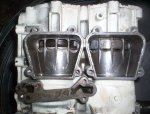
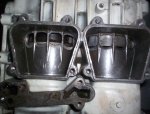
The photos only show the bypass side but the exhaust side was treated the same.
Also note that these old engines had a three ring piston with the wrist pin pressed into the connecting rod small end and carried by two needle bearings in the piston. When changing to newer style pistons, the rods must be changed also.
For those of you who may have noticed: The three rings and piston needle bearings are why the wrist pin is set so low in the newer pistons and why the rods are so short. Chrysler and Force never redesigned the pistons and rods when they went to two rings.
If you want to try an experiment, on the late 80s to early 90s Force engines with a 3.375 bore you can swap in rods and pistons from a late 90s Force 75 or 90 HP engine. Merc changed these engines and gave them a rod 1/4 inch longer for less piston side thrust and a slight increase in power. I have not yet been able to find a junker engine to salvage the rods so I have not yet tried this but rest assured, eventually I will.
I previously ported my old 1967 two cylinder Chrysler 55. It gave decent results, but you can't expect miracles from 44.5 cubic inches.
After porting, it did drive my 15 foot Glastron V153 deep vee at 27 MPH, which I think is good for an engine of that vintage. The only reason I replaced this engine with a 90 was because my son was skiing and getting bigger. While the 55 would pull him out on a slalom, it was difficult on one ski and the top speed left something to be desired.--After all, how can you ski 36 36 when the boat can't get to 36?
The photos only show the bypass side but the exhaust side was treated the same.
Also note that these old engines had a three ring piston with the wrist pin pressed into the connecting rod small end and carried by two needle bearings in the piston. When changing to newer style pistons, the rods must be changed also.
For those of you who may have noticed: The three rings and piston needle bearings are why the wrist pin is set so low in the newer pistons and why the rods are so short. Chrysler and Force never redesigned the pistons and rods when they went to two rings.
If you want to try an experiment, on the late 80s to early 90s Force engines with a 3.375 bore you can swap in rods and pistons from a late 90s Force 75 or 90 HP engine. Merc changed these engines and gave them a rod 1/4 inch longer for less piston side thrust and a slight increase in power. I have not yet been able to find a junker engine to salvage the rods so I have not yet tried this but rest assured, eventually I will.