




Hello All,
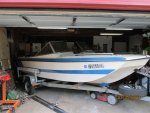
I have inherited my dad's boat and have a couple of questions that some of
you may be able to answer. It is a 1976 Magnum model 171 Trihull manufactured by
Mag-Tex of Fort Worth, TX. I have looked all over the place and cannot find any
information on Mag-Tex. Did they go out of business, get bought out, change name?
Does anyone know? Now about the boat.
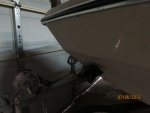
1. The bow eye seems to be way to high to me. I have looked at a lot of other
Tri Hull boats and all them have the bow eyes much lower. Shouldn't it be
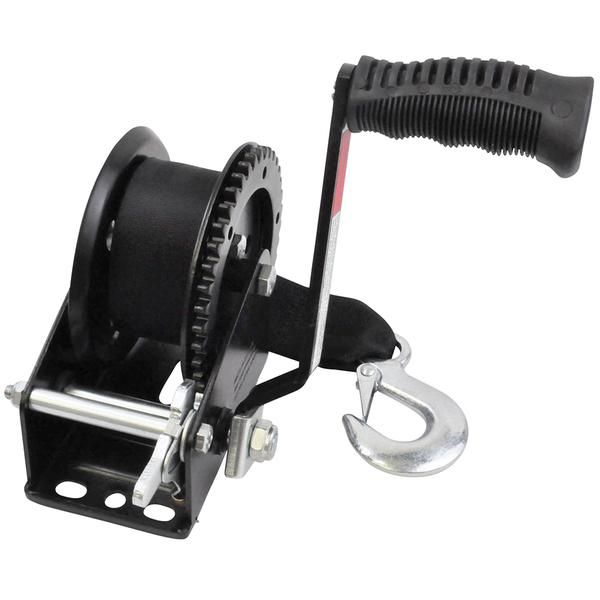
lower down? If the winch should be pulling level or slightly up then I have
to move my winch up quite a bit.
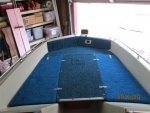
2. The boat was modified (I assume by the factory) to change the bow rider
area into a casting platform. The starboard back-to-back seats we replaced
with a single removable seat and a livewell. Beside the livewell another
removable set was added. Was this a common option for bowriders back then?
3. There are 2 storage areas under the bow casting platform. When they built
the boat they did not put the floor all the way forward so the bottom of the
storage areas is the inside of the hull. The floor appears to stop right in
front of the consoles. The carpet in these areas was glued to the inside of
the hull. Was this a common practice in 1976?
4. In these 2 storage areas foam was glued along the side of the hull. It looks
like it was a poured in foam but there is nothing around it to have contained
it when put into place. Did they use a thin plastic to make the form and then
remove it?
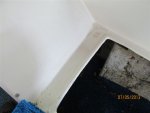
5. The bow casting platform is not level all the way across. It drops down and back
about 1/2" from the center towards the side. I assume to make it drain to the
sides but there is no drain so the water puddles in the corner.If the puddle
is deep enough,it will flow over into the storage area. Why not dip it down
towards the middle so the water could flow across the floor to the bilge area?
6. When the cap was installed it was glassed to the hull in the bow area. It also
appears that they used an adhesive or resin all around the boat under the rub rail.
Was this a common practice? I have not removed any of the rub rail to see if they
used screws or rivets yet. They also installed the cap with the gas tank (steel)
in place. The only way I could get the tank out so I could inspect it and clean
it was to cut a notch in the cap since the fill and outlet connections stuck up
higher than the bottom of the cap rail. Was this normal as well?
7. How do you determine how much floatation foam is enough? I know I can just fill
the cavity under the floor but how do you know if that is enough?
I plan to take it down this winter and replace the floor and stringers. It has
several soft spots. (Transom too if it needs it.) I plan to move the livewell to the area
right in front of the motor and add a couple of jump seats back there soI am trying to get
my plan put together now. I assume Mag-Tex used wood to form the stringers but have not
removed any of the floor to find out for sure. Does anyone know?
Thanks in advance for the help.
I have inherited my dad's boat and have a couple of questions that some of
you may be able to answer. It is a 1976 Magnum model 171 Trihull manufactured by
Mag-Tex of Fort Worth, TX. I have looked all over the place and cannot find any
information on Mag-Tex. Did they go out of business, get bought out, change name?
Does anyone know? Now about the boat.
1. The bow eye seems to be way to high to me. I have looked at a lot of other
Tri Hull boats and all them have the bow eyes much lower. Shouldn't it be
lower down? If the winch should be pulling level or slightly up then I have
to move my winch up quite a bit.
2. The boat was modified (I assume by the factory) to change the bow rider
area into a casting platform. The starboard back-to-back seats we replaced
with a single removable seat and a livewell. Beside the livewell another
removable set was added. Was this a common option for bowriders back then?
3. There are 2 storage areas under the bow casting platform. When they built
the boat they did not put the floor all the way forward so the bottom of the
storage areas is the inside of the hull. The floor appears to stop right in
front of the consoles. The carpet in these areas was glued to the inside of
the hull. Was this a common practice in 1976?
4. In these 2 storage areas foam was glued along the side of the hull. It looks
like it was a poured in foam but there is nothing around it to have contained
it when put into place. Did they use a thin plastic to make the form and then
remove it?
5. The bow casting platform is not level all the way across. It drops down and back
about 1/2" from the center towards the side. I assume to make it drain to the
sides but there is no drain so the water puddles in the corner.If the puddle
is deep enough,it will flow over into the storage area. Why not dip it down
towards the middle so the water could flow across the floor to the bilge area?
6. When the cap was installed it was glassed to the hull in the bow area. It also
appears that they used an adhesive or resin all around the boat under the rub rail.
Was this a common practice? I have not removed any of the rub rail to see if they
used screws or rivets yet. They also installed the cap with the gas tank (steel)
in place. The only way I could get the tank out so I could inspect it and clean
it was to cut a notch in the cap since the fill and outlet connections stuck up
higher than the bottom of the cap rail. Was this normal as well?
7. How do you determine how much floatation foam is enough? I know I can just fill
the cavity under the floor but how do you know if that is enough?
I plan to take it down this winter and replace the floor and stringers. It has
several soft spots. (Transom too if it needs it.) I plan to move the livewell to the area
right in front of the motor and add a couple of jump seats back there soI am trying to get
my plan put together now. I assume Mag-Tex used wood to form the stringers but have not
removed any of the floor to find out for sure. Does anyone know?
Thanks in advance for the help.