Cracked block ( can I weld it )

Donmailloux1

Cadet
Joined
Mar 26, 2018
Messages
7
Alright so winter is coming close to an end, and I decided to go take a look at my boat since I missed the thing all winter
drained the boat properly in the winter and everything put the antifreeze etc...

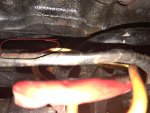
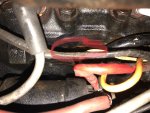
now as I’m checking, some how it’s not anti freeze it’s water that froze my block and cracked it , there wasn’t much water maybe 300ml, and I have no idea what to do...

can it be welded or am I looking at complete rebuild :confused::confused:
 

Attachments

  • photo287204.jpg
    photo287204.jpg
    676.7 KB · Views: 7
  • photo287205.jpg
    photo287205.jpg
    770.4 KB · Views: 8

Bondo

Moderator
Staff member
Joined
Apr 17, 2002
Messages
71,357
Ayuh,.... Welcome Aboard,..... Cast iron don't weld very good,... causes more cracks than it fixes,.....

A replacement block is the cure,.....
 

Scott Danforth

Grumpy Vintage Moderator still playing with boats
Staff member
Joined
Jul 23, 2011
Messages
51,872
agree with Bondo, best repair on a cracked cast iron block is to replace it. yes, that means a full rebuild or a replacement long block.
 

alldodge

Moderator
Staff member
Joined
Mar 8, 2009
Messages
43,604
While I agree with the others, the best thing would be replace. Would also think that if your not getting any water in the oil you could grind a Vee into the crack, acetone, then JB weld it.
 

Donmailloux1

Cadet
Joined
Mar 26, 2018
Messages
7
So now my other question is, am I better to buy a short block that’s crate ready to drop it, or do I by the short block and put all my old stuff back on it
 

Donmailloux1

Cadet
Joined
Mar 26, 2018
Messages
7
AllDodge i think I might start by trying to weld it, gunna do compression test, check the oil see if it’s all milky and go from there, people sell motors for the same price as a new boat
 

alldodge

Moderator
Staff member
Joined
Mar 8, 2009
Messages
43,604
Never said what motor this is or year, but think it may be a 3.0, and if so and compression is good, you could go short block. Only issue is finding a short block may cost as much as a long block. Could also find a rotted out hull with a good motor for less. Junking a boat at the dump is normally not that much
 

Donmailloux1

Cadet
Joined
Mar 26, 2018
Messages
7
AllDodge i have a thrundercraft 1987 magum 190 expresss it has the 4.3 vortec, people are telling me the job weld could work because it’s not a high pressure area
 

kenny nunez

Captain
Joined
Jun 20, 2017
Messages
3,477
There is a process known as “cold welding” or “lace welding”. Machine shops that specialize in heavy and industrial diesel repair. A series of holes are drilled and tapped, as a plug is installed a hole is then drilled partially into the plug and the crack and the process is repeated to the end of the crack.
Option #2 is to get a “fitted” new block which comes with new pistons, cam bearings and maybe main bearings.
 

HT32BSX115

Supreme Mariner
Joined
Dec 8, 2005
Messages
10,083
AllDodge i think I might start by trying to weld it, gunna do compression test, check the oil see if it’s all milky and go from there, people sell motors for the same price as a new boat

You'll be wasting your time doing a compression test. Compression tests only test for compression, NOT block cracks/leaks.

If you want to try to seal the cracks by any method, after your "fix" you'll need to pressure test the block to about 10-15 psi or so.

This is done by closing all cooling system connections, isolating the exhaust manifold (I.E. disconnect it from the cooling system)

You can seal all the block cooling system connections using simple plumbing connections, hoses, plugs etc.

Connect an air supply using anything that can produce 10-15 psi through a valve that you can close after pressuring it up. If you have an extra gage, connect it on the engine side of the valve so you can see pressure in the block after you close the valve. If the pressure drops immediately, you have a leak. If it drops slowly, you still have a leak so you have to find it......

Turn the compressor off so you can listen for leaks (internal hissing)......externally, you can splash a little soapy water in the area suspected of cracks and look for bubbles.

In general terms, if it's cracked on the outside, it is usually cracked on the inside.......Also, cracked blocks cannot be welded unless the block is first placed in a kiln and heated to nearly a dull red first, welded and put back into the kiln so it can be slowly cooled.

Just getting some nickle rod and zapping away is also a waste of time......you'll just create more cracks.

If your cracks are on the outside only, many people have had some success with cleaning, grinding and drying the cracks then using JB-Weld or other epoxy to seal them.

If it's me, I would replace the block. via either a used engine, short block, long block etc.

Good luck!

Rick

 

thumpar

Admiral
Joined
Jun 21, 2007
Messages
6,138
You'll be wasting your time doing a compression test. Compression tests only test for compression, NOT block cracks/leaks.

If you want to try to seal the cracks by any method, after your "fix" you'll need to pressure test the block to about 10-15 psi or so.

This is done by closing all cooling system connections, isolating the exhaust manifold (I.E. disconnect it from the cooling system)

You can seal all the block cooling system connections using simple plumbing connections, hoses, plugs etc.

Connect an air supply using anything that can produce 10-15 psi through a valve that you can close after pressuring it up. If you have an extra gage, connect it on the engine side of the valve so you can see pressure in the block after you close the valve. If the pressure drops immediately, you have a leak. If it drops slowly, you still have a leak so you have to find it......

Turn the compressor off so you can listen for leaks (internal hissing)......externally, you can splash a little soapy water in the area suspected of cracks and look for bubbles.

In general terms, if it's cracked on the outside, it is usually cracked on the inside.......Also, cracked blocks cannot be welded unless the block is first placed in a kiln and heated to nearly a dull red first, welded and put back into the kiln so it can be slowly cooled.

Just getting some nickle rod and zapping away is also a waste of time......you'll just create more cracks.

If your cracks are on the outside only, many people have had some success with cleaning, grinding and drying the cracks then using JB-Weld or other epoxy to seal them.

If it's me, I would replace the block. via either a used engine, short block, long block etc.

Good luck!

Rick

I think the compression check is a good idea just so see if the engine is worth trying to patch. No use putting much time in if the internals need to be freshened up anyway.
 

Scott Danforth

Grumpy Vintage Moderator still playing with boats
Staff member
Joined
Jul 23, 2011
Messages
51,872
I inquired once with my engine builder long ago on welding up a crack on a block as I had a motor from a roll-over and one of the mounting bosses was cracked. they were welding a 1923 ford 4-pot block at the time that was original to the car. the cost of welding the block is more than the cost of a new long-block with a warranty.

as fisherdan pointed out. you simply dont spend time welding a 4.3. much less a 31 year old 4.3.

best advice I have. go to car-part.com. find a 4.3 out of the newest low-mileage S-10 truck you can find with a manual transmission (motors will cost same $500 if its 10 years old or 30 years old). buy a marine vortec 4-barrel intake and get a marine edelbrock 1409 carb. buy new manifolds and elbows, swap over your alternator, starter, distributor, water pump, pulleys, bracket etc. you will need spacers for the pulleys. you now have a motor with 40+ more hp for under $1000 and the rest is plug-n-play

here is some reading on the 4.3

https://forums.iboats.com/forum/eng...history-of-the-4-3-liter-with-casting-numbers
 

M2HB

Petty Officer 1st Class
Joined
Oct 7, 2017
Messages
206
I had a big chunk of cast iron busted off of a 6 cylinder Jeep engine where to alternator mounted and the timing chain cover was. I bought the Jeep as a salvage wreck and the frame shop decided to bent the alternator back into shape. That resulted in a big chunk busted off the front of the engine. I was able to get to both sides and weld it back on with nickel alloy rod. It has to be pre heated, and peened while it cools slowly. I think I was successful, because I drove it for about 100,000 miles after the repair and it was still going strong when I sold it. A lot depends on where it is.
 

HT32BSX115

Supreme Mariner
Joined
Dec 8, 2005
Messages
10,083
Welding the cooling system water jacket is nothing like welding up an engine mount or external mounting boss.....It's actually possible to successfully weld external mount points etc......

It's just not worth it with freeze damaged cooling areas since it's impossible to weld internal cracks. The external leaks can be successfully be sealed by "stitching" and/or using epoxy. http://www.locknstitch.com/index.html

Internal cracks/leaks are just about impossible to even get to. And while they may be weldable (professionally) it's usually cheaper to just replace recreational marine blocks.
 
Top