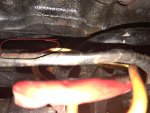
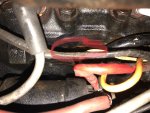
AllDodge i think I might start by trying to weld it, gunna do compression test, check the oil see if it’s all milky and go from there, people sell motors for the same price as a new boat
You'll be wasting your time doing a compression test. Compression tests only test for compression, NOT block cracks/leaks.
If you want to try to seal the cracks by any method, after your "fix" you'll need to pressure test the block to about 10-15 psi or so.
This is done by closing all cooling system connections, isolating the exhaust manifold (I.E. disconnect it from the cooling system)
You can seal all the block cooling system connections using simple plumbing connections, hoses, plugs etc.
Connect an air supply using anything that can produce 10-15 psi through a valve that you can close after pressuring it up. If you have an extra gage, connect it on the engine side of the valve so you can see pressure in the block after you close the valve. If the pressure drops immediately, you have a leak. If it drops slowly, you still have a leak so you have to find it......
Turn the compressor off so you can listen for leaks (internal hissing)......externally, you can splash a little soapy water in the area suspected of cracks and look for bubbles.
In general terms, if it's cracked on the outside, it is usually cracked on the inside.......Also, cracked blocks cannot be welded unless the block is first placed in a kiln and heated to nearly a dull red first, welded and put back into the kiln so it can be slowly cooled.
Just getting some nickle rod and zapping away is also a waste of time......you'll just create more cracks.
If your cracks are on the outside only, many people have had some success with cleaning, grinding and drying the cracks then using JB-Weld or other epoxy to seal them.
If it's me, I would replace the block. via either a used engine, short block, long block etc.
Good luck!
Rick