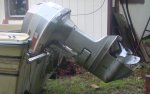
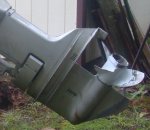
1971 Evinrude 85193A 85hp lower unit cracks

Mike Barber

Cadet
Thread starter
Joined
Sep 4, 2018
Messages
10
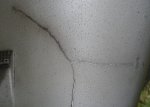
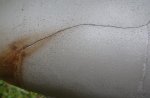
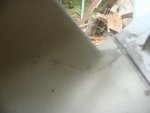
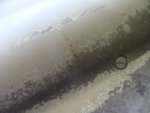
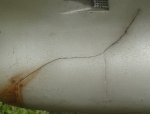
Several cracks in the lower unit. I did some searching for a used replacement but didn't have much luck. Got the boat, motor and trailer for free and I'd really like to restore it.

First, anyone know where to look for a used replacement....

Second, if push comes to shove..... and I want to try to repair the cracks, remove the unit..... can I take the propeller shaft and associated bearings and seals out when I put it back together do I have to measure end-play with an indicator setup like I have seen in my shop manual? Any special torque/thrust requirements, special tools, etc?
 

Attachments

  • photo301202.jpg
    photo301202.jpg
    659 KB · Views: 0
  • photo301203.jpg
    photo301203.jpg
    913.2 KB · Views: 0
  • photo301204.jpg
    photo301204.jpg
    885.9 KB · Views: 0
  • photo301205.jpg
    photo301205.jpg
    1.7 MB · Views: 0
  • photo301206.jpg
    photo301206.jpg
    1.8 MB · Views: 0
  • photo301207.jpg
    photo301207.jpg
    598.6 KB · Views: 0
  • photo301208.jpg
    photo301208.jpg
    204.8 KB · Views: 0

Joe Reeves

Supreme Mariner
Joined
Feb 24, 2002
Messages
13,262
There's a reason that you got that thing for nothing Mike... I strongly suggest that you find someone else to unload it on and possibly make a $25.00 profit.

Some mechanics state that the shift setup of that year was the most simplest they've ever come across. Frankly I think they got dropped on the head at a very young age and never quite recovered. It's design incorporates a electrical cable that travels straight down thru the blazing hot exhaust tube which eventually eats up said cable, one of many items in that unit that are no longer available. That cable supplies 12v to one of two, or both electric solenoids that have critical adjustments, and said solenoids cause varying degrees of pressure on a oil pump's levers to change the oil pressure flow against a spring loaded clutch shifter dog. Yes.... special tools required and obviously a bit of knowledge.

Used spare lower units for that V4 model from 1969 thru 1972 would interchange but (only my opinion of course) I think it could bring about mental problems. :)
 

racerone

Honorary Supreme Mariner
Joined
Dec 28, 2013
Messages
40,028
That lower unit was full of water.-----Froze and cracked.-----I consider electric shift to be very simple.-----Can overhaul a unit like that without looking at the manual.-----I am just across Lake Huron.
 

Joe Reeves

Supreme Mariner
Joined
Feb 24, 2002
Messages
13,262
That lower unit was full of water.-----Froze and cracked.-----I consider electric shift to be very simple.-----Can overhaul a unit like that without looking at the manual.-----I am just across Lake Huron.

See..... There's one now! :)
 

racerone

Honorary Supreme Mariner
Joined
Dec 28, 2013
Messages
40,028
At one time I worked on gearboxes.----Weighed 1500 lbs.----Input was 2 variable speed / variable torque / reversing electric motors.---Going into 2 differentials------7 output shafts with 2 electric clutches on each shaft.-----Electric brakes on each motor.-----Electric brakes on output shafts too.------So a little gearbox on an 85 HP outboard is elegantly simple !!!
 

F_R

Honorary Supreme Mariner
Joined
Jul 7, 2006
Messages
28,226
Oops, here is another one. While maybe not "simple", it isn't complicated if you understand it. I'm sure Joe understands it though. And I respect his opinion of it.

Anyhoo, the question concerned setting it up upon reassembly. The special gauge tool mentioned was to set the proper shims for the pinion gear / drive shaft assembly. And yes it is necessary if the pinion or shaft are replaced.

Going strictly by the rust stains running out of the crack, my guess is it is a total loss inside due to rusty gears & bearings.
 

Joe Reeves

Supreme Mariner
Joined
Feb 24, 2002
Messages
13,262
At one time I worked on gearboxes.----Weighed 1500 lbs.----Input was 2 variable speed / variable torque / reversing electric motors.---Going into 2 differentials------7 output shafts with 2 electric clutches on each shaft.-----Electric brakes on each motor.-----Electric brakes on output shafts too.------

Yeah... But then it sunk right after hitting that iceberg!
 

hardwater fisherman

Lieutenant Commander
Joined
Mar 19, 2010
Messages
1,725
At one time I worked on gearboxes.----Weighed 1500 lbs.----Input was 2 variable speed / variable torque / reversing electric motors.---Going into 2 differentials------7 output shafts with 2 electric clutches on each shaft.-----Electric brakes on each motor.-----Electric brakes on output shafts too.------So a little gearbox on an 85 HP outboard is elegantly simple !!!

My hero.. When I grow up I want to be just like you..
 

jimmbo

Supreme Mariner
Joined
May 24, 2004
Messages
14,699
I thought on the Hydro electric shifts the electrical cable ran outside of the exhaust tube, in the midsection, unlike the previous generation of Electric Shifts where the cable was in the exhaust passage

As for the OP and his cracked case. Someone forgot to drain the water out of the case before freezing temps occurred. Deep six the whole thing as the guts are probably corroded beyond reuse.

As for the Hydro Electric Shift. It had some good engineering behind it, shifted super fast and if maintained with required Oil changes, it was reliable. Understanding it does require the proper service manuals, but it is a lot easier to work on than the newer electronic controlled monstrosities being sold these days
 
Last edited:

racerone

Honorary Supreme Mariner
Joined
Dec 28, 2013
Messages
40,028
No , the cable runs inside the exhaust housing on hydro-electrics.
 

F_R

Honorary Supreme Mariner
Joined
Jul 7, 2006
Messages
28,226
I say jimmbo wins that one. The Hydro-Electrics have an inner exhaust tube that the heat and fire goes through.. In between that inner exhaust tube and the outer exhaust housing is a space that fills up with a "wall of water", as the competition called it. The cable goes down through that space / water.

Previous electric spring clutch cables did indeed pass through the fire and often got cremated.
 

Joe Reeves

Supreme Mariner
Joined
Feb 24, 2002
Messages
13,262
Regardless of where the electrical cable ran... Electric Shift, running thru the hot exhaust chamber... Hydro Electric Shift, running thru a water filled chamber... I still hold fast that. although I thoroughly understand the throughout complexity of the unit and have repaired two or three of them without a comeback, it's a over-engineered design incorporating three actions, electrical, hydraulic, and mechanical that could have, and have had been done in the past via one (mechanical) of which it was returned to in 1979.... and remained there ever since.

It's only well intentioned feature was to slam into forward gear to enable forward motion if all else failed that resulted in a shifting malfunction.
 
Last edited:

jimmbo

Supreme Mariner
Joined
May 24, 2004
Messages
14,699
The Hydro-Electric shift was discontinued after 72. In 73 a Hydro-Mechanical replaced it for the next few years.
 

F_R

Honorary Supreme Mariner
Joined
Jul 7, 2006
Messages
28,226
There was another not much advertised advantage to Hydro and Power Shift schemes. It allows a slight bevel on the clutch dog and forward gear to latch them together when engaged and prevent jumping out of gear. The hydraulic assist makes them easy to dis-engage that latch-up. Other solutions have also been used through the years, such as ignition interrupt switches.

The default to forward proved to be a not-so-good idea. It isn't good to default to forward if it causes you to run over something or somebody when it jumps into gear unexpectedly. They don't say much about that. But Powershift eliminated that possibility.
 

Joe Reeves

Supreme Mariner
Joined
Feb 24, 2002
Messages
13,262
The Hydro-Electric shift was discontinued after 72. In 73 a Hydro-Mechanical replaced it for the next few years.

I'm aware of that Jim. The shift assist came into play in 1973 which still incorporated a oil pump and continued on until 1979 when the straight mechanical shift came back into the picture, hence my mention of 1979 instead of 1973.
 
Last edited:

racerone

Honorary Supreme Mariner
Joined
Dec 28, 2013
Messages
40,028
Hydro-mechanical was gone on 2 and 3 cylinder in 76 and V-4 in 78.
 

jimmbo

Supreme Mariner
Joined
May 24, 2004
Messages
14,699
There was another not much advertised advantage to Hydro and Power Shift schemes. It allows a slight bevel on the clutch dog and forward gear to latch them together when engaged and prevent jumping out of gear. The hydraulic assist makes them easy to dis-engage that latch-up. Other solutions have also been used through the years, such as ignition interrupt switches.

The default to forward proved to be a not-so-good idea. It isn't good to default to forward if it causes you to run over something or somebody when it jumps into gear unexpectedly. They don't say much about that. But Powershift eliminated that possibility.


Might be why the Hydro-Electrics had very long Clutch Dog life. The Hydro-Mechanical, while the bevels helped, an ‘ease it into gear’ method of operation, would still beat the snot out of the gear and dog.

In my youth I remember a bunch of us ‘borrowing’ a neighbours boat to ski. It had an Hydro-Electric shift. Even without the key, we could rope start the engine, or use pliers to bypas the solenoid, and use the boat. No neutral or reverse, and to stop it we had to choke the engine.
 

Paulywog0667

Petty Officer 2nd Class
Joined
Aug 5, 2017
Messages
139
An aluminum weld and sand flat. JB weld can help smooth for the final sand. The hydro-electric has a pump that pushes a piston, which pushes the clutch dog away from the forward gear. How much is dependent on one or two solenoids voltage. Both forward and reverse are always spinning from the drive shaft and pinion gear, but the clutch dog being part of the propeller shaft, engages forward or reverse.

The bearing carrier o-ring is important area to make sure is still a good seal before wasting $1.00 on an aluminum welding rod.
 

jimmbo

Supreme Mariner
Joined
May 24, 2004
Messages
14,699
An aluminum weld and sand flat. JB weld can help smooth for the final sand. The hydro-electric has a pump that pushes a piston, which pushes the clutch dog away from the forward gear. How much is dependent on one or two solenoids voltage. Both forward and reverse are always spinning from the drive shaft and pinion gear, but the clutch dog being part of the propeller shaft, engages forward or reverse.

The bearing carrier o-ring is important area to make sure is still a good seal before wasting $1.00 on an aluminum welding rod.

The case, in fact the entire unit is scrap metal.
 
Top