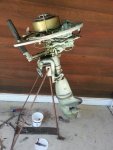
I recently inherited, for a reasonable fee, a 1951 TN 26 that belonged to my cousin's grandfather. Last time he can recall it running was c. 1967 and I believe that is probably accurate. I don't have a boat (I do have one I can borrow that would be suitable) and I have no experience with boats or motors but I love vintage machinery, have some experience with old two stroke motorcycles, and want to put this little thumper back on the water where it belongs.
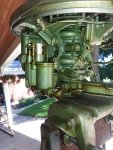
I have removed the fuel tank, which was dry and covered with lead oxides inside and grease/oil/dirt outside. The tank is soaking now after removing the fuel tap, which is solidly gummed up. The carb is frightful. I removed the fuel line and very thick oil, thicker than 90w, is slowly dripping out and I'll remove the carb later once I set up a suitable drainage location. I am sure I will need to obtain seals but I am looking for a basic carb rebuild guide to make it easy.
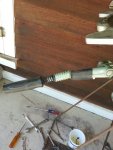
The only physical damage beyond scuffs and scrapes is the tiller handle. The rubber grip is broken and a heavy spring is exposed. I'm not sure if there is supposed to be more to it, or if it just needs a new grip. There is a little tube taped on with shear pins, nothing broken there.
Water pumps are new to me, the two strokes I work on are all air cooled so I am not sure what I need to know about cooling on this motor.
I'd also like recommendations on the most suitable two stroke oil, spark plug, and gearcase oil for this motor. I've searched this forum and found old threads about carb seals but I'm also looking for other tips and tricks to bring this old beauty back to life. I just want it lakeworthy, I'll save cosmetic restoration for post-retirement.
Thanks in advance,