



metriccrescentwrench
Commander
- Joined
- Oct 22, 2007
- Messages
- 2,598
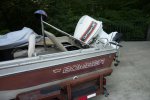
I was getting my boat (1981 15 ft Bomber fish-n-ski) ready to take my son and his buddy skiing when I noticed a loose bracket on the swim ladder. One thing led to another, I saw that some of the fiberglass skin near the top of the transom had a little 'give' to it when I pushed hard on it so I pulled back the fairing at the top of the transom to investigate further.
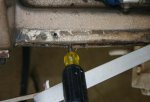
OK, someone please tell me it's normal to be able to jab a screwdriver with hardly any resistance into the transom like in that first photo . I informed my son that we wouldn't be skiing or fishing this weekend, and probably not for quite a while. The rest of the transom still seems solid, but I just don't want to take any chances.
I've gathered a fair amount of knowledge from other threads here about transom repair, and am pretty good with fiberglass (I've built a fiberglass airplane) so in general I think I understand what has to happen. I still have a few questions, and will always take input from those that have been through this before me in the hopes of easing my pain.
What kind of plywood should I use, and any suggestions for a source? (I live near Atlanta.)
What should the layup schedule be?
Will polyester resin be OK, or should I use epoxy for all of it, or epoxy for just the places that need to attach to existing glass?
I see no way around removing the entire cap (at least not without cutting it in front of the livewell/cooler and leaving some ugly scars). Anybody want to disagree with me here? On the bright side, if I've got to remove the cap I'll have easy access to replace all the livewell plumbing, which is getting very old.
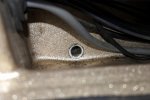
The third photo is of the splashwell drain fitting. It's flared out on both sides and obviously has to come out. Any suggestions on the least intrusive way to remove it, and what to do about a replacement for it (maybe a properly sized section of PVC pipe sealed in place with 5200?)
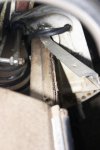
The fourth photo is another view of the port side of the transom showing a gap between the skin and cap. That looks like a terrific place for water to get into, shouldn't that be glassed over, or at least sealed?
(Oh, by the way - the "thing" on the ski pole is an old basketball that sacrificed itself to help save my boat cover).
OK, someone please tell me it's normal to be able to jab a screwdriver with hardly any resistance into the transom like in that first photo .
I informed my son that we wouldn't be skiing or fishing this weekend, and probably not for quite a while. The rest of the transom still seems solid, but I just don't want to take any chances.I've gathered a fair amount of knowledge from other threads here about transom repair, and am pretty good with fiberglass (I've built a fiberglass airplane) so in general I think I understand what has to happen. I still have a few questions, and will always take input from those that have been through this before me in the hopes of easing my pain.
What kind of plywood should I use, and any suggestions for a source? (I live near Atlanta.)
What should the layup schedule be?
Will polyester resin be OK, or should I use epoxy for all of it, or epoxy for just the places that need to attach to existing glass?
I see no way around removing the entire cap (at least not without cutting it in front of the livewell/cooler and leaving some ugly scars). Anybody want to disagree with me here? On the bright side, if I've got to remove the cap I'll have easy access to replace all the livewell plumbing, which is getting very old.
The third photo is of the splashwell drain fitting. It's flared out on both sides and obviously has to come out. Any suggestions on the least intrusive way to remove it, and what to do about a replacement for it (maybe a properly sized section of PVC pipe sealed in place with 5200?)
The fourth photo is another view of the port side of the transom showing a gap between the skin and cap. That looks like a terrific place for water to get into, shouldn't that be glassed over, or at least sealed?
(Oh, by the way - the "thing" on the ski pole is an old basketball that sacrificed itself to help save my boat cover).