
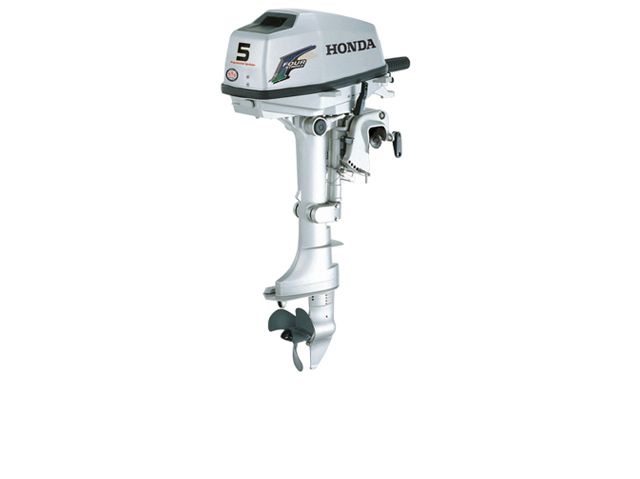
ted williams 9.9

scastle

Recruit
Joined
Nov 29, 2012
Messages
2
took my little motor in to be tuned and repaired, feller at shop called and said #2 cylender wasnt fireing, needs new coil or stator,he wasnt for shure,plus he couldnt find one because of its age,1973 anyone know where to find one.i dont have numbers as he still has motor. should i take it to some one else? thanks

 

steelespike

Supreme Mariner
Joined
Apr 26, 2002
Messages
19,069
Re: ted williams 9.9

Pretty sure the 73 9.9 is an Eska built motor. It has a solid state ignition.
I think they are notorious for ignition failure. Someone should be along with info about the system and parts.
I do believe ignition parts are a little easier to find than they have been.
 

tomhath

Master Chief Petty Officer
Joined
Dec 5, 2007
Messages
814
Re: ted williams 9.9

took my little motor in to be tuned and repaired, feller at shop called and said #2 cylender wasnt fireing, needs new coil or stator,he wasnt for shure,plus he couldnt find one because of its age,1973 anyone know where to find one.i dont have numbers as he still has motor. should i take it to some one else? thanks

I'd consider another mechanic, he should be able to tell pretty easily if it's the coil (just switch them and see if the other cylinder still has spark). He sounds like a parts replacer to me.
 

MahtyMaht

Chief Petty Officer
Joined
Apr 7, 2010
Messages
605
Re: ted williams 9.9

It's either pay these guys;

CDI Electronics: Marine Ignition Parts

Or de-pot your SSI modules, and rebuild your own. Some folks fabricate their own replacement SSI modules based on this;

Silicon Chip Online - Replacement CDI Module For Small Petrol Motors

These guys are actively engaged in solving this specific problem with these models;

eskaoutboards : Eska Outboards Group

You can join the group, and poke around in the 'files' section, and find all manner of relevant stuff.
 
M

mrcrabs

Guest
Re: ted williams 9.9

If it were mine I would follow Mahtys advice 100%, then the first thing I would do on my own is pop the flywheel, scribe the stator to the case and remove the stator, then pop all glue from the connectors on the bottom of the modules one at a time! and lose them one at a time and re tighten with a eye on any heavy corrosion, I would leave the heavy siliconed ground alone for now....clean every thing including the spade terminals at the pulse Transforners/coils and rather than switch coils around which is ok too but Ohm'ing them is much easer for me....I would just check ohms at the high tension end/spark plug wire and if one fails yank out the wire and test from the nail inside the PT/coil. what were looking for ais a bad plug wire or PT/coil or connection, all of which can make the system fail Ohms on a digitial will jump crazy and fall back to 0...thats good, anolog meters do about the same with a good meter spike to about 1800 then back to 0, with coils tested consentrate on the module connectors I first stated...do not remove them all at the same time or you will lose your air gap setting,I have seen as many units repaired this way as I have phsically tearing into them....just my 2 cents

View attachment 179185The reason for looking at the Pulse Transformer, PT is that the connector at the spark plug is a common poor connetion. If the plug is carbon fouled, the spark may occur at the poor connection and not the plug gap causing a missfire. This is one of the few things anybody can test for by measuring the resistance from the spark connector to the mounting bracket. When I did this, I found two different resisances; concluding that they made a internal design change using thinner wire to save on copper. If the measurement is erratic or open, then remove the boot and re-measure directly from the stranded wire. If the measurement is still open, the PT has failed. Doug finds that the OMC Transformer, sierra part no. 18-5176 is a suitable replacement. I am not shure what to think about the 305 Ohms on Brennan's unit. Inside the PT are two windings, both connected to the mounting bracket. The primary, input winding has few turns of a heavy wire so it has a very low resistance, like .1 Ohms, so I don't bother checking it. The secondary winding has many, many turns of fine wire which steps up the voltage from the capacitor for a spark. Unlike an ignition coil, the core is made of Ferrite, a ceramic instead of iron. The Ferrite can respond to a change in magnetic field much faster than iron. Ed StollerNew Fairfield, CT, USA
some older units ohm out in the low 300 range
 
Top