Motor Corrosion or oxidation?

barticus73

Cadet
Joined
May 21, 2011
Messages
19
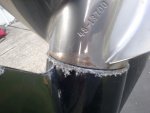
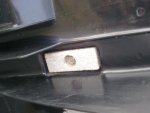
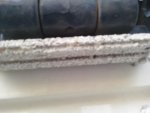
I bought a boat with a 196 Mercury 150 hp outboard and have a question on the white chalky stuff on parts of it. See the pics. Is this a type of rust/corrsion? What do I do to remove it and repair so it doesnt come back. Guy said it had never seen salt water. Also, are the sacraficial anodes on these standard size or are they different for each motor? Where is a good place to get replacements?

Thanks
 

Attachments

  • 2011-07-24 18.47.15.jpg
    2011-07-24 18.47.15.jpg
    135.6 KB · Views: 0
  • 2011-07-24 18.48.48.jpg
    2011-07-24 18.48.48.jpg
    118.2 KB · Views: 0
  • 2011-07-24 18.49.25.jpg
    2011-07-24 18.49.25.jpg
    114.7 KB · Views: 0
  • 2011-07-24 18.49.00.jpg
    2011-07-24 18.49.00.jpg
    130.8 KB · Views: 0

Texasmark

Supreme Mariner
Joined
Dec 20, 2005
Messages
14,900
Re: Motor Corrosion or oxidation?

I boats probably has the sacrificial elements. Don't know if standard, or not; probably not, but I don't know.

If not used in salt water, it may have been sitting in a marina for a long time with the engine in the full down position.

I'd take the prop off and clean and paint the inside of the housing as there is a good chance it will look like the outside. Grease your prop shaft while you are there and grease it; Merc lube or Lubriplate white.

Oh and I'd use Genuine Merc Phantom Black Lacquer....will probably stay on longer and I would first prime with Zinc Chromate primer which is especially effective in protecting Aluminum from the elements.....I'm sure you have seen it applied before....it is olive drab in appearance.

HTH

Mark
 

RRitt

Captain
Joined
Mar 30, 2006
Messages
3,319
Re: Motor Corrosion or oxidation?

The white stuff is Aluminum Oxide. It is caused by stainless steel and conductive water. You do not need salty water for galvanic corrosion. I have seen engines get it from parking under a pine tree. The pine sap contains enough acid to make the rain water runoff conductive. There are also some lakes in Texas and Oklahoma that have enough minerals in them to cause galvanic corrosion. High amounts of pollution can cause same thing. All you need is water that conducts. There is a galvanic chart. In general, soft metals are at one end and hard metals are at the other. The further apart the metals are then the more strongly they react. Aluminum is considered very low, less than copper. Iron is middle high. Nickle is very high. Stainless 316 is very high. The more stainless you have on your engine then the more aggressively the aluminum is attacked. The ideal engine would be all aluminum and non-metalic composites. However, aluminum just isn't strong enough for bolts & stuff so you are forced to use iron, steel, and stainless. Keep your anodes healthy to minimize the damages.

 
Top