











Mercruiser 3.0 hard to start

MerkyWater

Cadet
Joined
May 24, 2018
Messages
6
Have a 1998 3.0L mercruiser with Alpha One. Last weekend worked on ignition ended up changing slave solenoid. This weekend i have it cranking but i couldnt get her to start. downloaded manual, checked spark and coil. drained fuel from tank. today took carb apart and cleaned it. Well now it will start and run. idles about 900 rpm but will occasionally die if not increased the idle speed. but it will run all day at around 1000-1200rpm.
So, here is the first problem....if you shut it off and restart it right away it starts just fine. if you shut it off and let it set a few min it is very hard to restart and it wont restart without giving it some throttle. in other words it wont restart at just idle speed. So i notice that after it is shut off, if you look down inside the carb, it is steadily dripping gas on both sides. Is it flooding itself out after it is shut off? Is there something not sealing properly inside the carb? float not adjusted properly? when i had it apart i tested the needle and seat and it does shut off when operated manually on the bench.
Also a note, everything inside the carb looks pretty new. so it may have had a kit put in recently, but not sure.
Any suggestions or opinions i would sure appreciate it.
 

TurtleTamer

Petty Officer 2nd Class
Joined
May 10, 2018
Messages
143
Yup, dripping fuel from the venturi cluster is flooding carb. You may be able to see if it's coming from the custer itself OR from the overflow above the cluster by seeing if it's wet with fuel around the entirety of the cluster. The former would more likely be too high of a float adjustment where the latter would more likely be a needle/seat problem.
 

MerkyWater

Cadet
Joined
May 24, 2018
Messages
6
Thank you guys. So that's an interesting information and I really can't tell where the drip originates. It's definitely dripping from the venturi cluster.
So if I might ask another question...lets say the float is set too high. How does that cause the fuel to continue to drip after the engine is shut off? What I am asking is how does the fuel get from the bowl to the point where it's dripping if say the float were to high or if the needle weren't seating?
 

Lightwin 3

Petty Officer 1st Class
Joined
May 18, 2010
Messages
300
Thank you guys. So that's an interesting information and I really can't tell where the drip originates. It's definitely dripping from the venturi cluster.
So if I might ask another question...lets say the float is set too high. How does that cause the fuel to continue to drip after the engine is shut off? What I am asking is how does the fuel get from the bowl to the point where it's dripping if say the float were to high or if the needle weren't seating?

The float bowl does have an overflow.

On a marine carb, it flows back into the engine, instead of on the ground for obvious reasons..
 

MerkyWater

Cadet
Joined
May 24, 2018
Messages
6
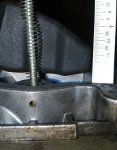
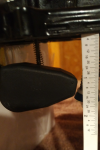
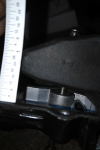
So I posted these pics of me measuring the travel of my float currently. The 3rd pic is the point where the needle seats and I can no longer blow through the fuel inlet. If my thinking is correct and the needle is seating properly then the float shouldn't get any higher than this and would never reach the top of its available travel if this is the point at which the fuel is shutting off. Obviously something is happening here or I wouldn't be dripping fuel. Any thoughts I would appreciate.
 

Attachments

  • photo291439.png
    photo291439.png
    1.7 MB · Views: 2
  • photo291440.jpg
    photo291440.jpg
    989.9 KB · Views: 1
  • photo291441.png
    photo291441.png
    1.8 MB · Views: 2

TurtleTamer

Petty Officer 2nd Class
Joined
May 10, 2018
Messages
143
Blowing into the inlet isn't a very good method for testing since you're not reproducing your fuel pressure and there's no vacuum from the engine. I will do it to ensure that the needle is seating but it's not a good metric for determining float level.

If the first pic is your float height then it's way too high if you've got the spring-loaded needle. It should be 9/16" (or 18/32" on your gauge there). I use the MM and set it at 14. The drop isn't as crucial, and I couldn't comment on the accuracy of yours as I don't remember it off the top of my head.

Looking at the first pic, the hole below the spring-loaded rod (can't remember the proper name) is where the fuel will come from if the needle doesn't seat correctly and you flood the bowl. Someone with more experience could tell you whether or not it could flood bad enough to come out of the atmospheric vent at the top of the bowl but that hole in the pic is where I've had it come out with needle/seat problems. This is what I was referring to in my earlier post about the fuel being visible around the base of the venturi cluster. If it comes from the hole it'll spill down and flow around the venturi cluster but will still drip from the ends.
 
Top