


toneeees
Administrator
- Joined
- Mar 15, 2011
- Messages
- 3,024
Types of Marine Wire
Primary Marine Wire
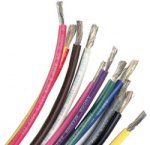
The smaller AWG (American Wire Gauge) sizes (16 to 8 AWG) of single conductor wire are called primary wires. These usually make up the circuit wiring of a boat's auxiliary systems to the main battery. Typically used for DC electrical switches & controls.
Marine Battery Cable
Large (6 to 4/0 AWG), single conductor wire is refered to as battery cable. The cable usually has a high tin plated copper strand count. The tin plated copper helps minimize corrosion and extend the life of the cable. Typically used for battery installation and DC main power take offs.
Marine Dulplex Wire
These can help simplify wire installation by reducing the number of seperate wires run throughout a boat. Different color codes are used depending on the application. AC wiring uses back & white. DC uses black & red or red & yellow. Red & yellow is the safety color to eliminate the risk of connecting black AC with black DC. Typically used for DC main power take offs, DC electrical switches & controls, AC wiring.
Marine Triplex Wire
Another common multiconductor boat cable, triplex wire can also reduce time spent in installation. The usual color code for triplex wire is black, white & green (designed for AC as hot, neutral & ground). Typically used for AC wiring.
Marine Color Code
-------- Frequently Asked Questions
Can I use 'regular wire' for my boat?
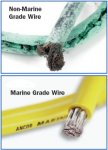
The answer to this common question is a qualified "yes," if the wire is SAE J378, J1127 or J1128. These wires are designed for "surface vehicles," not for the special requirements of the marine industry, but meet the minimum standards for boats in limited circumstances. Even if tinned copper, they should not be run in blige spaces or other areas subject to moisture from spray or dripping. They should not be run in engines spaces, unless marked "oil resistant" and "75deg C". They should not be used in applications where subjected to vibration or frequent flexing and must never be used for 110 volt applications. For safety, use only wire which is marked with size and type.
Most importantly, SAE wire is up to 12% smaller than AWG Boat Cable which means that, in many applications, larger gauge wire must be used to stay within the voltage drop limits recommended by experts.
Using the wrong type of wire can cost you more in the long run. Insist on Marine Grade boat cable. It is UL approved for the corrosive marine environment. It is designed to exceed all test standards for cold bend, moisture and oil resistance, heat shock and flammability. This ensures the safest, easiest to install, longest lasting and ultimately the least expensive electrical system you can buy.
Why is the use of "safety" duplex with Yellow & Red inner conductors recommended?
Yellow wire is recommended as DC negative because black is the standard color for AC hot. There have been many cases of people working on their DC systmes who have inadvertently cut the live AC wire. Because of the wide spread use of inverters, power generators and shore power connections, even today's smallest boats pose a risk of inadvertently cutting into AC wires when working on DC systems.
What is the advantage of using a Double Crimp Terminal?
The Couble Crimp Terminal has an extra barrel which, when crimped, will remove all strain from the wire stranding and place the strain on the wire jacket. This prevents terminations from loosening under stress, pull or vibration all of which are common in the marine environment.
Do you recommend soldering or crimping terminals?
Crimping is recommended over soldering. Per ABYC standards, "Solder shall not be the sole means of mechanical connection in ANY circuit". Further, crimping provides a solid mechanical connection resistance to "cold joints", breaking under fatigue and removes strain when using double crimp connectors.
What size wire do I need?
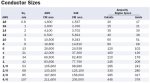
Complete the formula listed here and match the CM area number you receive from the formula to the CM area number in the Table below.
CM=(K x I x L)/E
CM = Circular Mil Area of Conductors (compare with chart below to find AWG wire size needed)
K = 10.75 (Constant representing the mil-foot resistance of copper)
I = Current (Amps)/Length (feet) (Current is determined by adding the total amps on a circuit.)
L = Length (feet) (Length is determined by measuring the length of the conductor from the positive power source connection to the electrical device and back to the negative power source connection. Note: the power source connection may be either the battery, panelboard or switchboard.)
E = Voltage drop at load (in decimal expression). Use 3% (0.03) for any "critical" applications affecting safety such as: bilge pumps, navigation lights, electronics, etc. Use 10% (0.1) for any "non-critical" applications: windlass, cabin lights, etc.
Primary Marine Wire
The smaller AWG (American Wire Gauge) sizes (16 to 8 AWG) of single conductor wire are called primary wires. These usually make up the circuit wiring of a boat's auxiliary systems to the main battery. Typically used for DC electrical switches & controls.
Marine Battery Cable
Large (6 to 4/0 AWG), single conductor wire is refered to as battery cable. The cable usually has a high tin plated copper strand count. The tin plated copper helps minimize corrosion and extend the life of the cable. Typically used for battery installation and DC main power take offs.
Marine Dulplex Wire
These can help simplify wire installation by reducing the number of seperate wires run throughout a boat. Different color codes are used depending on the application. AC wiring uses back & white. DC uses black & red or red & yellow. Red & yellow is the safety color to eliminate the risk of connecting black AC with black DC. Typically used for DC main power take offs, DC electrical switches & controls, AC wiring.
Marine Triplex Wire
Another common multiconductor boat cable, triplex wire can also reduce time spent in installation. The usual color code for triplex wire is black, white & green (designed for AC as hot, neutral & ground). Typically used for AC wiring.
Marine Color Code
| Color | Item | Use |
| Red | DC Positive Conductor | Positive Mains |
| Black or Yellow | DC Negative Conductor | Return, Negative Mains |
| Green or Green w/ Yellow Stripe | DC Grounding Conductor | Bonding System Bonding Wires (if insulated) |
| Light Blue | Oil Pressure | Oil Presure Sender to Gauge |
| Dark Blue | Cabin & Instrument Lights | Fuse or Switch to Lights |
| Brown | Generator Armature | Generator Armature to Regulator |
| Alternator Charge Light | Generator Terminal/Alternator Auxiliary Terminal to Light to Regulator | |
| Pumps | Fuse or Switch to Pumps | |
| Grey | Navigation Lights | Fuse or Switch to Lights |
| Tachometer | Tachometer Sender to Gauge | |
| Orange | Accessory Feed | Ammeter to Alternator or Generator Output and Accessory Fuses or Switches |
| Common Feed | Distribution Panel to Accessory Switch | |
| Pink | Fuel Gauge | Fuel Gauge Sender to Gauge |
| Purple | Ignition | Ignition Switch to Coil & Electrical Instruments |
| Instrument Feed | Distribution Panel to Electric Instruments | |
| Brown w/ Yellow Stripe | Bilge Blowers | Fuse or Switch to Blower |
| Yellow w/ Red Stripe | Starting Circuit | Starting Switch to Solenoid |
| Tan | Water Temperature | Water Temperature Sender to Gauge |
| Green/Stripe (G/x) (except G/Y) | Tilt Down and/or Trim In | Tilt and/or Trim Circuits |
| Blue/Stripe (Bl/x) | Tilt Up and/or Trim Out | Tilt and/or Trim Circuits |
-------- Frequently Asked Questions
Can I use 'regular wire' for my boat?
The answer to this common question is a qualified "yes," if the wire is SAE J378, J1127 or J1128. These wires are designed for "surface vehicles," not for the special requirements of the marine industry, but meet the minimum standards for boats in limited circumstances. Even if tinned copper, they should not be run in blige spaces or other areas subject to moisture from spray or dripping. They should not be run in engines spaces, unless marked "oil resistant" and "75deg C". They should not be used in applications where subjected to vibration or frequent flexing and must never be used for 110 volt applications. For safety, use only wire which is marked with size and type.
Most importantly, SAE wire is up to 12% smaller than AWG Boat Cable which means that, in many applications, larger gauge wire must be used to stay within the voltage drop limits recommended by experts.
Using the wrong type of wire can cost you more in the long run. Insist on Marine Grade boat cable. It is UL approved for the corrosive marine environment. It is designed to exceed all test standards for cold bend, moisture and oil resistance, heat shock and flammability. This ensures the safest, easiest to install, longest lasting and ultimately the least expensive electrical system you can buy.
Why is the use of "safety" duplex with Yellow & Red inner conductors recommended?
Yellow wire is recommended as DC negative because black is the standard color for AC hot. There have been many cases of people working on their DC systmes who have inadvertently cut the live AC wire. Because of the wide spread use of inverters, power generators and shore power connections, even today's smallest boats pose a risk of inadvertently cutting into AC wires when working on DC systems.
What is the advantage of using a Double Crimp Terminal?
The Couble Crimp Terminal has an extra barrel which, when crimped, will remove all strain from the wire stranding and place the strain on the wire jacket. This prevents terminations from loosening under stress, pull or vibration all of which are common in the marine environment.
Do you recommend soldering or crimping terminals?
Crimping is recommended over soldering. Per ABYC standards, "Solder shall not be the sole means of mechanical connection in ANY circuit". Further, crimping provides a solid mechanical connection resistance to "cold joints", breaking under fatigue and removes strain when using double crimp connectors.
What size wire do I need?
Complete the formula listed here and match the CM area number you receive from the formula to the CM area number in the Table below.
CM=(K x I x L)/E
CM = Circular Mil Area of Conductors (compare with chart below to find AWG wire size needed)
K = 10.75 (Constant representing the mil-foot resistance of copper)
I = Current (Amps)/Length (feet) (Current is determined by adding the total amps on a circuit.)
L = Length (feet) (Length is determined by measuring the length of the conductor from the positive power source connection to the electrical device and back to the negative power source connection. Note: the power source connection may be either the battery, panelboard or switchboard.)
E = Voltage drop at load (in decimal expression). Use 3% (0.03) for any "critical" applications affecting safety such as: bilge pumps, navigation lights, electronics, etc. Use 10% (0.1) for any "non-critical" applications: windlass, cabin lights, etc.