












it started out as milky oil under valve covers

atcfan

Cadet
Joined
Mar 11, 2013
Messages
10
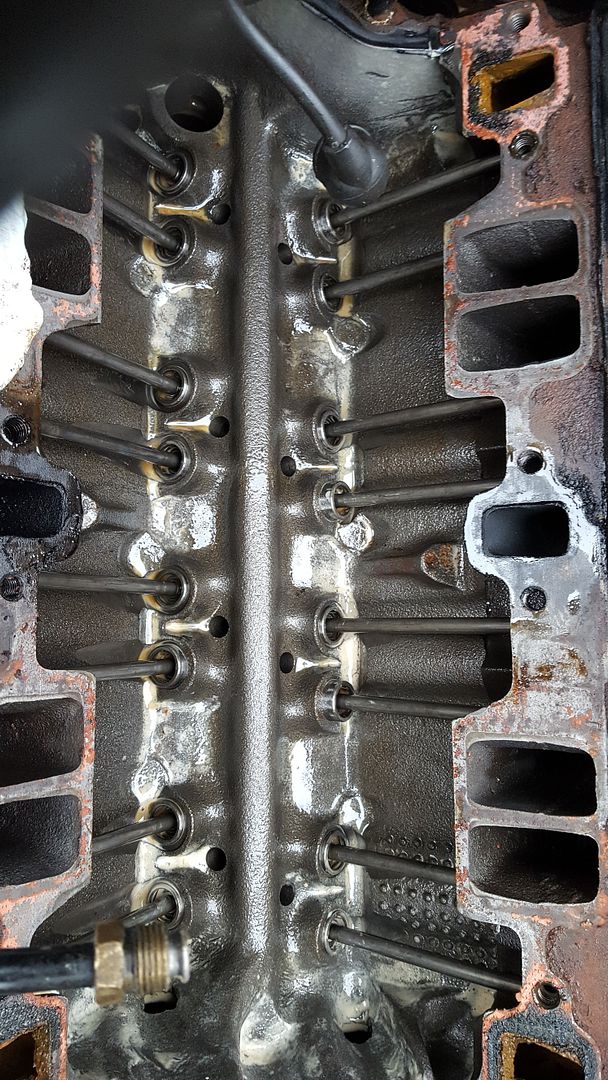
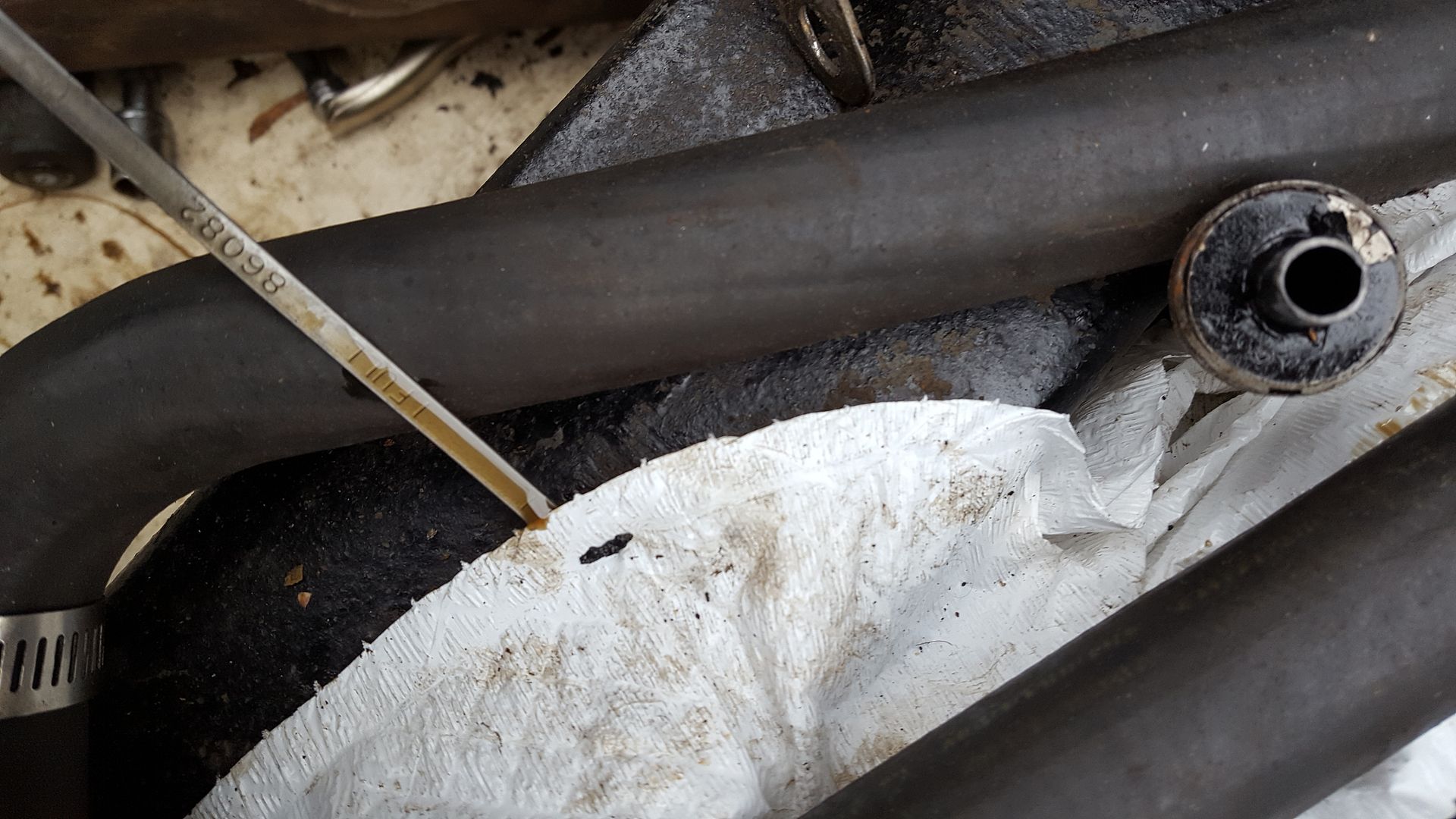
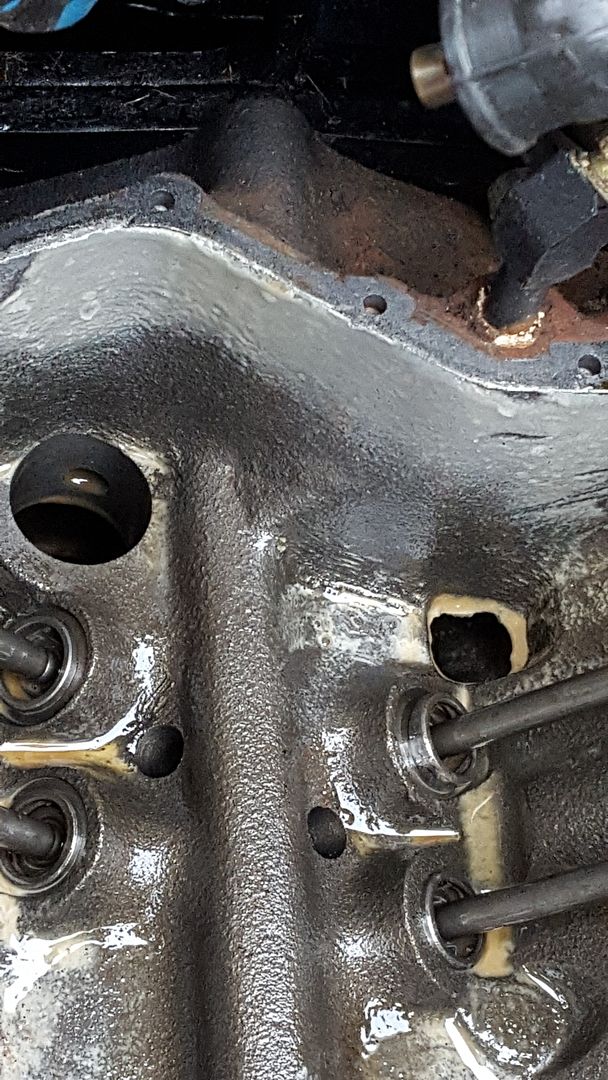
I have a 1982 Formula with a Mercruiser 260 v8, which I bought the first week of April and fired it up on muffs and let it idle for about 20 minutes to let it warm up. The temp gauge held steady at around 140 degrees, checked the dip stick and no signs of milky oil so called it a day. Over the next few weeks i started it up for a few minutes at a time trying to fix the tachometer and voltage gauge along with a few other minor issues. Well by the 3rd week of May i had it in the water and took a few short trips on the lake. I had a issue with a leaky thermostat housing and also a noisy gimbal bearing so i pulled it out of the water. I got it home and happened to look under the oil cap and noticed milky oil so i pulled the dipstick but that looked fine. so i figured it must be all the short runs i have doing and causing moisture under the valve covers. Well today i get around to fixing the thermostat housing and decide to pull the valve covers to have a closer look. I didn't what i saw so i said hey if i am screwed might as well pull the intake. here are the pics. I do remember after the first day i fired it up in April about a week later the outside temps dropped to about 28 degrees for a few hours so maybe i screwed myself by starting it up too soon this spring. Looking at these photos do i have a cracked block, head, intake or exhaust manifold or is it excess moisture from short runs on the motor.
 

fhhuber

Lieutenant
Joined
Jun 19, 2014
Messages
1,365
That much is not a good sign... Probably something letting cooling water get into the oil.

Do compression check on each cylinder as the first test in trying to find where.

I'm not sure how hard it would be to do a pressure/leakdown test of the cooling system. Depends on the system.
 

NHGuy

Captain
Joined
May 21, 2009
Messages
3,631
Normally they crack in the valley about 8/10 of the way to the top. Since no cracks are visible your engine might still be OK. But it still could be a head gasket issue.
I'd suggest rinsing down whatever milkshake you can out of the valley. Then change the oil and take it for a run that really gets it hot. Make sure to run near where you launch in case you have to abort the ride!
 

atcfan

Cadet
Joined
Mar 11, 2013
Messages
10
What tests should i do before i buy new gaskets and put it back together and take it to the lake for a test ride? Obviously I am changing the oil. I pulled all the spark plugs and they all looked tan.
 

Bt Doctur

Supreme Mariner
Joined
Aug 29, 2004
Messages
19,480
What I see are rust stains around the intake ports. Being a 12 bolt I suspect no sealant was used around the water ports or the wrong gasket was used or the wrong torque on the bolts
If the motor was uncovered water can enter from the gasket area if it wasnt tight or an agressive power washer
 

flipbro

Master Chief Petty Officer
Joined
Feb 8, 2013
Messages
830
Dont rule out a leaking elbow/RISER gasket. I hade the same problem last year on a new engine. Turned out to be a leaky riser gasket replaced and all was good..
 

stonyloam

Vice Admiral
Joined
Mar 13, 2009
Messages
5,830
A few hours at 28 degrees is not likely to crack a block, I think NHGuy is on the right track. That does not look like a lot of water, a few teaspoons will go a long way in oil. A cracked block will let quarts of water in, and turn oil into a thick brown "milkshake". I am optimistic that you will be OK. Let us know how you make out. Good luck.
 

atcfan

Cadet
Joined
Mar 11, 2013
Messages
10
Ok so I'll clean it up the best I can and get intake gaskets along with sealant and might as well get exhaust elbow riser gaskets since they aren't that expensive, change the oil and give a hard run on the lake. Should have an outcome for everyone by this weekend.
 

NHGuy

Captain
Joined
May 21, 2009
Messages
3,631
To add, get the elbow to riser gaskets that are coated in graphite. It looks like shiny silver and has the consistency of a wax crayon before use. There is steel embedded inside the graphite. You'd have needed those anyway, they are single use.

Clean the mating surfaces well. The best way is with a surface prep rotary tool, they are about $15 at HF. You are trying for flat and smooth surfaces, so don't use the abrasive cookie to come onto edges, use it to go off them.

If you use it on the heads and intake be sure to stuff some cloth in the intake ports of the heads to catch any debris, you don't want your engine to eat anything solid that could score up it's machined surfaces.

AND, since there is the possibility that sealer was left out you should know that 2/3 of the head bolts on the small block require sealant. So IF you redo things and the oil does not clean up, it may be time for head bolt reseal.

Oh, here's another clue. Find top dead center with the valves closed on #1 and set the crank there while the motor is open. Then once assembled you can just set the distributor at #1.
 
Last edited:

atcfan

Cadet
Joined
Mar 11, 2013
Messages
10
well sorry it took so long to get back. I replaced the intake manifold gaskets and riser gaskets, put the new thermostat in and ran it for a good 30 minutes varying the rpm between idle and about 2k rpm. temps stayed between 125 and 140. No milky oil under the valve covers or on the dipstick. But then something caught my eye. a crack in the fiberglass on the stringer for the front motor mount. then i noticed one of the lag bolts wasn't even tight against the lock washer. I began poking around with a screw driver and yup rotted motor mount so i figured probably rotted transom. trying to convince myself that i will repair all this I decided to drill thru the adjacent stringer to check the flotation foam and Bam!!! exactly what i didn't want to see, wet foam. So i am throwing in the towel, cutting my loses now before i throw too much money away. Just for the heck of it i ran the motor again for 30 minutes on muffs to verify no milky oil and get a little bit of self accomplishment that i did at least one thing right on this F*&%ing boat.
 

achris

More fish than mountain goat
Joined
May 19, 2004
Messages
27,468
One of the misconceptions on these engine is that milky oil will show on the dipstick. Most of the time, it doesn't. Reason is because the dipstick tube is designed to be used to remove all the oil from the engine at oil change. The tube goes all the way to the bottom of the oil pan, so unless the oil volume is increasing, no 'new' (milky) oil will enter the tube. Car engines, the tube barely protrudes beyond the oil pan gasket, the dipstick is 'free Willy' in the oil. Any contamination will show easily.

Chris.....
 
Top