1999 5.7 Volvo Penta duoprop - exhaust flappers

Joined
Aug 11, 2009
Messages
1
Engine overheated and burned up exhaust flappers. Found this when engine was hydrolocking. As with prior posts, Volvo recommends not replacing and has bulletin. Covered up holes and tried again but kept getting water on top of cylinders - both sides. Volvo recommends 14" from water line to top of riser. I had 11" - got the riser extension - tallest they make, and put on. Cranked boat out of water fine. Put boat in and tested. Shut off for an hour and tried to restart - hydrolocked again. Pulled head on one side and took to NAPA to have it checked - no problems. No water in oil - my assumption is that it must be coming from back from exhaust.
 

Don S

Honorary Moderator Emeritus
Joined
Aug 31, 2004
Messages
62,321
Re: 1999 5.7 Volvo Penta duoprop - exhaust flappers

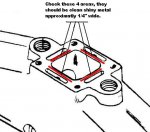
Was the manifolds and risers any good when you put the extentions in? If the sealing surfaces of the manifold and/or riser is eroded away, no amount of gaskets or risers will cure the problem.
Here is a picture of a Merc manifold and what to look for, same thing goes with Volvo.

attachment.php
 

Attachments

  • Manifold check.jpg
    Manifold check.jpg
    32 KB · Views: 1

jtybt

Senior Chief Petty Officer
Joined
Aug 5, 2009
Messages
730
Re: 1999 5.7 Volvo Penta duoprop - exhaust flappers

EXACTLY as Don said. In fact, the exhaust gasses are very corrosive and corrode away the exhaust passage to make the machined mating surface even thinner as time goes on. And to make things worse, the castings aren't the most accurately made parts and it doesn't take much to off-set the mating surface. Just think, if it's 1/16" off, you get 1/16" off from the opposing mating surface, too. That gives you 1/8" to protect your engine...and that's if you get the 1/4" wide mating surface that only the new manifolds and risers have relatively recently started making. They were 3/16" wide only a decade or less ago.

If you don't have a good wide surface, carefully draw a file across both mating surfaces to expose the widest and flattest possible joining surface.
 
Top