





Hey all, looks like you guys have a good forum going here.
I aquired a boat last fall with a 1959 evinrude on it. so far i have rebuilt the carb and replaced all fuel lines and got it started. i have some more parts on the way for the lower unit... anyways i was wondering if anyone has any experiance with this unit? just wondering what your opinion on it is and if you have any tips for me.
Thanks!
-Peter
Affectionatly known as the "Fat Fifty". Very good motor for it's day. A real work horse that will shove a load, but not really fast. Simple and easy to work on. That's the good part. The first thing you will hear about the down side is that it is the all-time champion gas guzzler that will suck in the sides of a 6 gallon tank in nothing flat. The next thing you will hear about is all the smoke, oily goo running out, and oil sheen on the water. That is just the way they are.
Welcome aboard Peter,
Many of us here still run these old motors. Your's is a Golden Jubilee motor. My '64 75hp was advertised as running for two hours on a tank of gas. The Fat Fifty requires 25 to 1 fuel/oil ratio which makes it worse for the fish. Comparitively speaking it was some 25 lbs lighter and 25 less horsepower than a 60's motor.
FR, does it too have the oil line into the exhaust that dumps fuel like mine? I'm considering modifying that lack of ingenuity.
Peter, I believe you can run that motor on a 50::1 Gas/oil ratio, since it has all roller and needle bearings. You might PM Joe Reeves to get the straight poop.
Evinrude... I modified the "fuel dumping" system on that motor to reburn the vabors that are dumped by piping them to the air intake of the carb, and piping the liquid stuff (mostly oil) to a seperate fuel tank.
The drain valves dump fuel into the exhaust housing, downstream of the powerhead's exhaust. A bunch more goes right through the cylinders and out the exhaust. Both sources mix together with exhaust and cooling water to get emulsified into the goo that freaks everybody out when they see it running out.
That motor did not have a fuel recirculation system, like all modern 2 cycle motors. Whenever liquid fuel would pool in the intake manifold or crancase, it was dumped into the exhaust housing to allow the motor to idle well and not load up. Also, on any non-DFI motor, unburned fuel does go out the exhaust port as a normal part of the scavanging action. In 1958 motors, the scavanging was not as efficient as in later models. Finally that motor was like a prototype for the OMC V4 motors that followed. It was extremely reliable and basically bulletproof, but it was low tech!
If you recycle the unburned fuel from the intake manifold, it will improve your economy significantly. On my '58 Fatty, I estimate that 1/6 of the fuel was dumped overboard via the intake manifold outlet.
That motor did not have a fuel recirculation system, like all modern 2 cycle motors. Whenever liquid fuel would pool in the intake manifold or crancase, it was dumped into the exhaust housing to allow the motor to idle well and not load up. Also, on any non-DFI motor, unburned fuel does go out the exhaust port as a normal part of the scavanging action. In 1958 motors, the scavanging was not as efficient as in later models. Finally that motor was like a prototype for the OMC V4 motors that followed. It was extremely reliable and basically bulletproof, but it was low tech!
If you recycle the unburned fuel from the intake manifold, it will improve your economy significantly. On my '58 Fatty, I estimate that 1/6 of the fuel was dumped overboard via the intake manifold outlet.
ok, well thats definitely a project i will have to look into once i get this thing up and running. has it been documented anywhere?
Not that I know of. I used a 1 pint oil bottle which I cut a hole in the bottom and mounted it upside down next to the carb intake, I ran the intake manifold hose into the botom of the bottle, and connected a hose to the bottle's cap with a brass hose barb. This hose ran back to the fuel tank. The motor pumped vapors and liquid into the bottle. The vapor was burned by the motor, and the liquid, gravity fed back to the tank.
The fuel is forced out of the intake manifold by a blast of crankcase pressure. This is the same pressure that runs the fuel pump. This pressure will push the fuel uphill to the bottle mounted near the carb intake. When you pull that hose with the motor running, you will see a cloud of vaporized gas/oil.
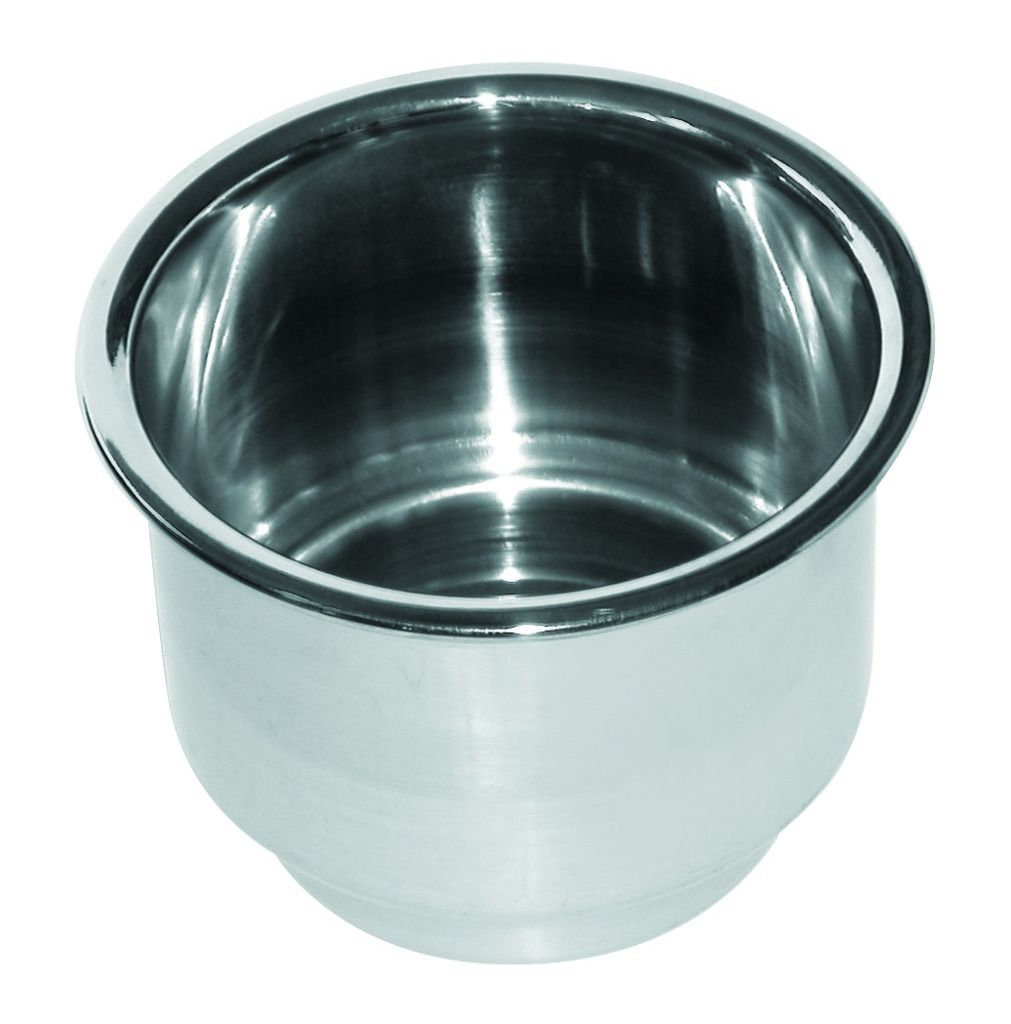
A similar problem exists on a lot of motorcycles for the crankcase breathers and oil. If you want a nice looking collection canister, something like this could be modified with a fitting at the bottom to drain fuel back into the tank.
ok bare with me here. so there is a hose coming out of the intake manifold? i thought the gas went from the carb thru the manifold then to the cylinders... what am i not seeing here?
As long as you locate the the vapor output near the carb intake, so the vapors do not build up,
BTW - The same vapors pressurize the oil injection resvoir in the boat on a Mercury outboard., as well as pressurize the fuel tank in the pre-1958 OMC outboards with two line systems and no fuel pump.
well i took apart the intake manifold last night to replace some gaskets, and i the only hose is that area in the fuel line going into the carburator...
It has been a few years for my memory, but there should be a hose and nipple at the base of teh intake manny. It may be hidden behind the fuel pump. It should run to the starboard side of the motor, just above the midsection.
well i looked at the manifold diagram in my manual, i see the hose your talking about on the diagram, but i for some reason do not have that hose on my engine. they must have changed something.
Replacing the carb float should drastically reduce the amount of fuel that gets dumped into the crankcase and then overboard. After 50 years, the carb float (originally plastic) is fuel-soaked and does not do its job properly.
Watch out for bad seals on the lower end. I need to tear apart my lower end due to massive leaks (leading to that water sheen they're talking about) and replace those. Good luck to all of us finding parts for these monsters!
And somebody searching the forum for useful info on this engine might still appreciate the help. I found it when it was six months old, and it helped a great deal.